
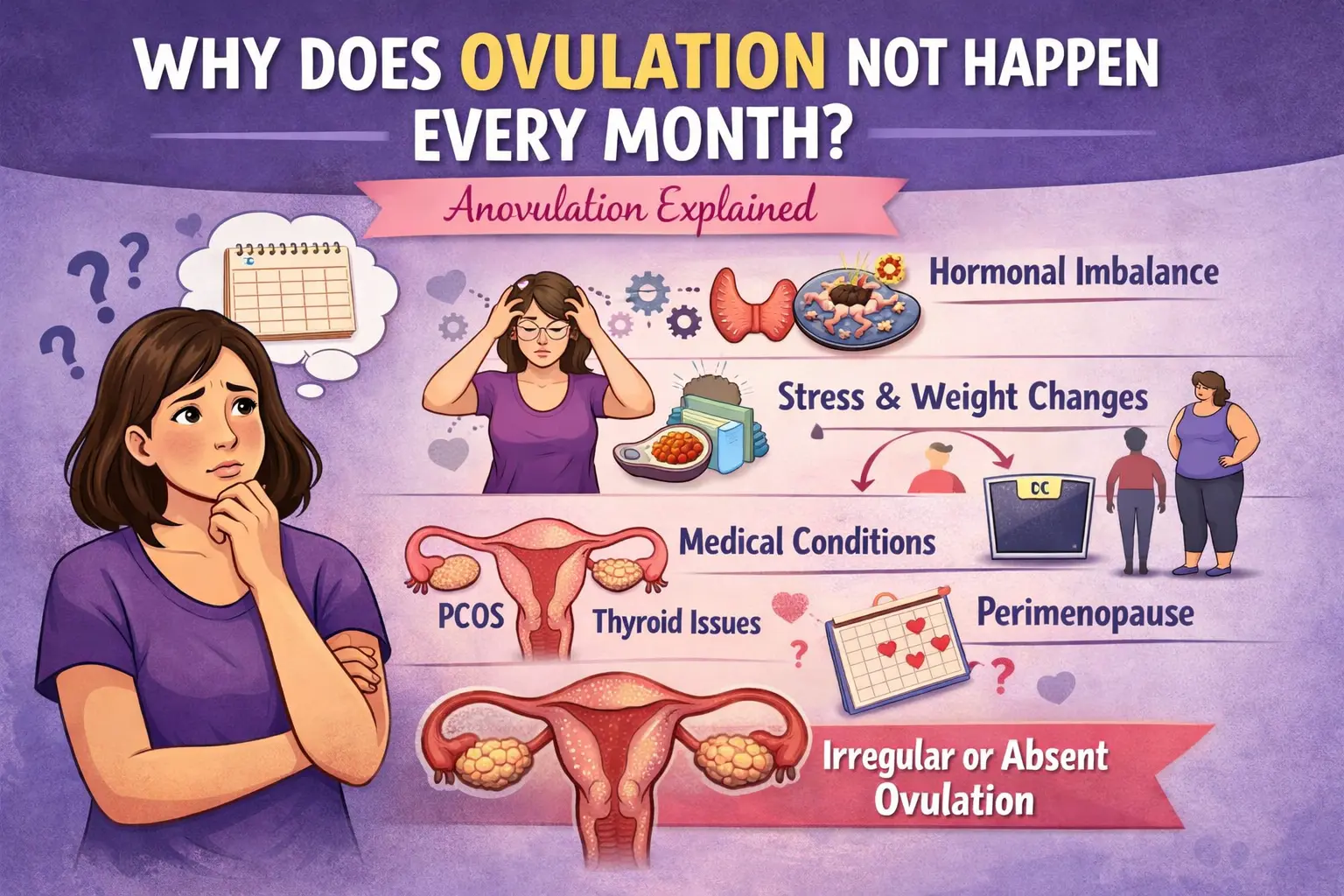
Why does ovulation not happen every month? Many women assume that ovulation occurs regularly in every menstrual cycle. However, in reality, some cycles may occur without the release of an egg. This condition is known as anovulation, and it is one of the common causes of irregular periods and difficulty conceiving.
At Medfemme Women’s Clinic, Hauz Khas, South Delhi, we frequently see women who are worried about irregular cycles or delayed pregnancy due to ovulation problems. Understanding why ovulation may not occur every month can help women recognise symptoms early and seek the right fertility guidance.
What Is Ovulation?
Ovulation is the process in which the ovary releases a mature egg during the menstrual cycle. This egg then travels through the fallopian tube, where it may be fertilised by sperm.
In a typical menstrual cycle:
- Ovulation usually occurs around day 12–16 in a 28-day cycle.
- The egg survives for about 12–24 hours.
- If fertilisation does not occur, menstruation begins.
When ovulation does not occur, the cycle is called anovulatory, meaning no egg is released.
What Is Anovulation?
Anovulation is a condition where the ovaries do not release an egg during the menstrual cycle. Without ovulation, pregnancy cannot occur naturally because there is no egg available for fertilisation.
Anovulation may happen occasionally in healthy women, but frequent or chronic anovulation may indicate an underlying hormonal or medical issue.
Common Reasons Why Ovulation Does Not Happen Every Month
1. Hormonal Imbalance
Ovulation is controlled by a delicate balance of reproductive hormones. If hormones such as estrogen, progesterone, FSH, or LH are not balanced, ovulation may not occur.
Hormonal disruptions can happen due to:
- Stress
- Sudden weight changes
- Thyroid disorders
- Certain medications
Hormonal imbalance is one of the most common causes of irregular ovulation.
2. PCOS (Polycystic Ovary Syndrome)
PCOS is one of the leading causes of anovulation in women of reproductive age.
Women with PCOS may experience:
- Irregular or missed periods
- Excess hair growth
- Acne
- Difficulty conceiving
In PCOS, the ovaries may contain many immature follicles but fail to release a mature egg regularly.
3. High Stress Levels
Chronic stress affects the hypothalamus in the brain, which regulates hormones responsible for ovulation.
When stress hormones increase, the body may temporarily delay or suppress ovulation. This is why emotional stress, lifestyle pressure, or poor sleep can sometimes lead to missed ovulation cycles.
4. Significant Weight Changes
Both being underweight and overweight can affect ovulation.
- Low body fat can disrupt estrogen production.
- Excess body fat can increase estrogen levels excessively.
These hormonal changes may interfere with the ovulation process.
5. Thyroid Disorders
The thyroid gland plays a key role in regulating reproductive hormones.
Both conditions can affect ovulation:
- Hypothyroidism (low thyroid hormone)
- Hyperthyroidism (high thyroid hormone)
Women with thyroid imbalance may experience irregular cycles or anovulation.
6. Premature Ovarian Insufficiency
Sometimes the ovaries may stop functioning normally before the age of 40. This condition is known as premature ovarian insufficiency (POI).
Women with POI may experience:
- Irregular periods
- Hot flashes
- Difficulty ovulating
This condition requires early fertility evaluation.
7. Natural Life Stages
Ovulation may naturally become irregular during certain phases of life, including:
- Adolescence (when cycles are still regulating)
- Perimenopause (when ovarian function gradually declines)
During these times, anovulatory cycles may occur occasionally.
Symptoms of Anovulation
Some women may not realise they are experiencing anovulation because periods may still occur. However, common signs include:
- Irregular menstrual cycles
- Very heavy or very light periods
- Missed periods
- Difficulty getting pregnant
- Lack of ovulation symptoms such as cervical mucus changes or mild ovulation pain
Tracking menstrual cycles and ovulation patterns can help identify potential problems.
How Is Anovulation Diagnosed?
Doctors may evaluate ovulation through several methods, including:
- Hormone blood tests (FSH, LH, AMH, thyroid hormones)
- Ultrasound scans to monitor follicle development
- Ovulation tracking
- Menstrual history assessment
A detailed fertility evaluation helps identify the underlying cause of ovulation problems.
Can Anovulation Be Treated?
Yes. In many cases, anovulation can be successfully treated depending on the cause.
Treatment options may include:
- Lifestyle modifications (diet, weight management, stress reduction)
- Hormonal medications to stimulate ovulation
- Treatment of thyroid disorders
- Fertility treatments such as IUI or IVF if required
Early diagnosis significantly improves the chances of restoring regular ovulation.
When Should You See a Doctor?
You should consult a fertility specialist if you experience:
- Irregular or absent periods
- Difficulty conceiving after 6–12 months
- Symptoms of PCOS
- Sudden changes in menstrual cycles
Professional guidance can help detect ovulation problems early and improve fertility outcomes.
Final Thoughts
Why does ovulation not happen every month? The answer often lies in hormonal balance, lifestyle factors, or underlying health conditions such as PCOS or thyroid disorders. While occasional anovulatory cycles are normal, frequent ovulation problems may require medical attention.
At Medfemme Women’s Clinic, Hauz Khas, South Delhi, we provide personalised fertility evaluation and treatment to help women understand their cycles and improve their chances of conception.
If you are experiencing irregular ovulation or struggling to conceive, seeking timely medical advice can make a significant difference in your fertility journey.
