
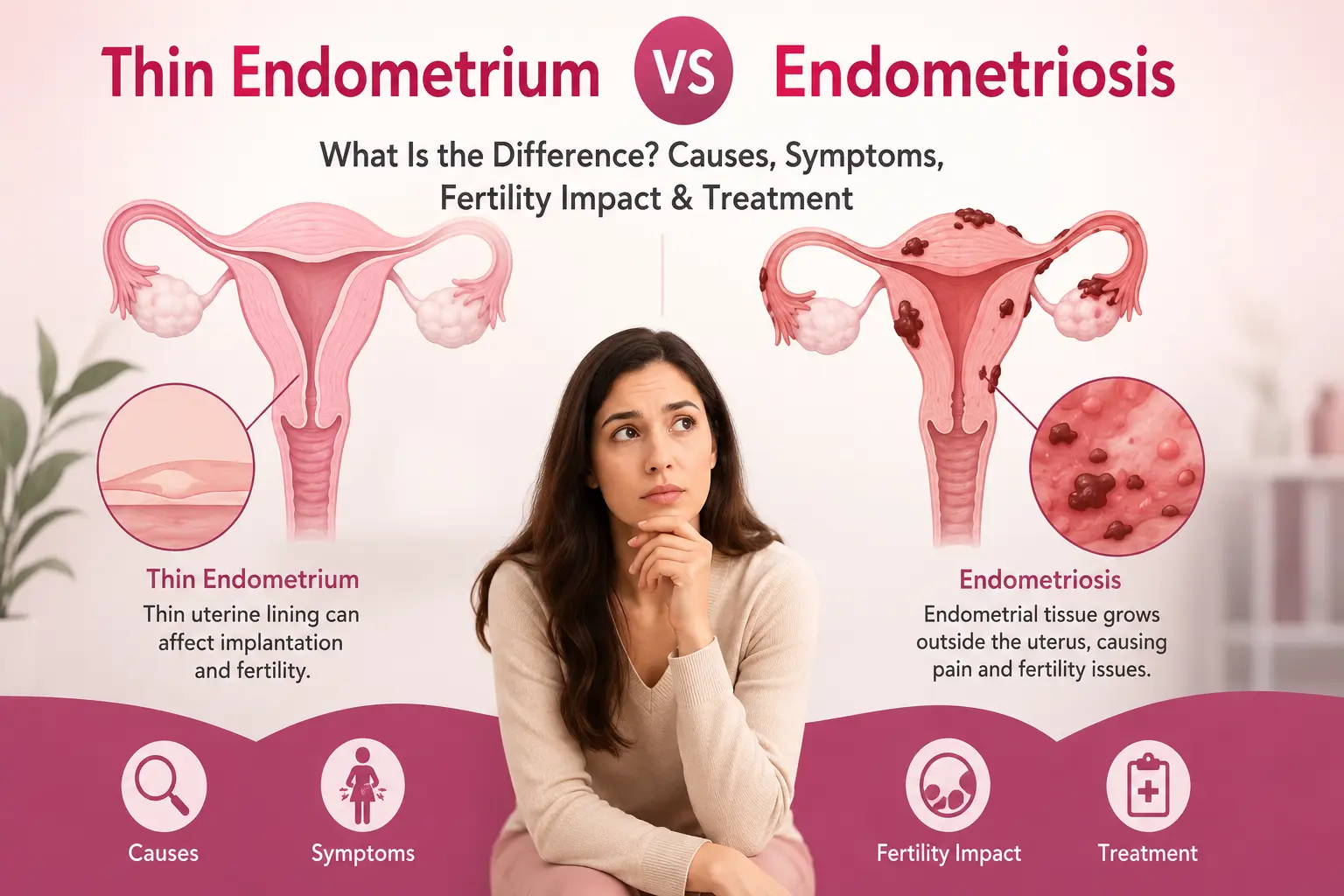
Many women trying to conceive often come across the terms Thin Endometrium and Endometriosis. Since both conditions are associated with infertility and pregnancy complications, they are frequently confused with one another. However, Thin Endometrium vs. Endometriosis is not a comparison of the same disease—they are entirely different medical conditions that affect fertility in different ways.
Understanding the difference between Thin Endometrium vs. Endometriosis can help women seek the right diagnosis, avoid unnecessary anxiety, and receive the most effective fertility treatment.
In this guide, we’ll explain the causes, symptoms, diagnosis, treatment options, and fertility implications of both conditions using evidence-based medical information.
Quick Answer
Thin Endometrium refers to an endometrial lining that is too thin (usually less than 7 mm) for successful embryo implantation.
Endometriosis is a chronic condition where tissue similar to the uterine lining grows outside the uterus, causing pain, inflammation, and fertility problems.
While both conditions may reduce pregnancy chances, they affect the reproductive system in completely different ways.
What Is a Thin Endometrium?
The endometrium is the inner lining of the uterus that thickens every month under the influence of estrogen. During ovulation, this lining becomes soft and nutrient-rich to allow an embryo to implant successfully.
A Thin Endometrium occurs when the uterine lining does not grow adequately during the menstrual cycle.
Most fertility specialists consider an endometrial thickness of:
- Less than 7 mm: Thin for implantation
- 7–14 mm: Generally considered ideal for pregnancy
- More than 15 mm: May require further evaluation
A thin uterine lining can reduce implantation rates during natural conception as well as IVF.
What Is Endometriosis?
Unlike a thin uterine lining, Endometriosis is a disease in which tissue similar to the endometrium grows outside the uterus.
These abnormal growths may develop on:
- Ovaries
- Fallopian tubes
- Pelvic lining
- Bladder
- Intestines
- Deep pelvic tissues
Although this tissue behaves like the uterine lining during each menstrual cycle, it has no way to exit the body, leading to inflammation, scarring, adhesions, and chronic pelvic pain.
Thin Endometrium vs. Endometriosis: Key Differences
| Feature | Thin Endometrium | Endometriosis |
| Definition | Thin uterine lining | Endometrial-like tissue outside uterus |
| Main Problem | Poor implantation | Inflammation & pelvic disease |
| Causes | Low estrogen, uterine damage, poor blood flow | Hormonal, immune & genetic factors |
| Symptoms | Often no symptoms | Severe period pain, pelvic pain |
| Menstrual Pain | Usually absent | Very common |
| Fertility Effect | Poor embryo implantation | Damaged eggs, tubes & implantation issues |
| Diagnosis | Ultrasound | Ultrasound, MRI, laparoscopy |
| Treatment | Hormonal therapy, PRP, fertility treatment | Medication, surgery, IVF |
This comparison highlights why Thin Endometrium vs. Endometriosis requires completely different treatment approaches.
Causes of Thin Endometrium
Several medical conditions can prevent the uterine lining from reaching its ideal thickness.
Common causes include:
- Low estrogen levels
- Reduced blood supply to the uterus
- Previous uterine infections
- Repeated D&C procedures
- Scar tissue (Asherman’s Syndrome)
- Long-term hormonal medications
- Smoking
- Advanced maternal age
Sometimes the exact cause remains unknown.
Causes of Endometriosis
Researchers still don’t know the exact cause of endometriosis, but several theories exist:
- Retrograde menstruation
- Genetic predisposition
- Immune system dysfunction
- Hormonal imbalance
- Chronic pelvic inflammation
- Environmental factors
Women with a family history of endometriosis are at higher risk.
Symptoms: Thin Endometrium vs. Endometriosis
Symptoms of Thin Endometrium
Many women have no obvious symptoms.
Possible signs include:
- Difficulty conceiving
- Recurrent implantation failure
- Recurrent miscarriage
- Light menstrual bleeding
- Short menstrual periods
Symptoms of Endometriosis
Endometriosis usually causes noticeable symptoms, including:
- Severe menstrual cramps
- Chronic pelvic pain
- Pain during intercourse
- Pain while passing urine or stools during periods
- Heavy periods
- Fatigue
- Infertility
Some women with advanced endometriosis may still have very mild symptoms.
How Do These Conditions Affect Fertility?
Thin Endometrium and Fertility
Even when healthy embryos are available, implantation becomes difficult if the uterine lining is too thin.
Poor endometrial development may lead to:
- Failed IVF cycles
- Implantation failure
- Chemical pregnancy
- Early miscarriage
This is why fertility specialists carefully monitor endometrial thickness before embryo transfer.
Endometriosis and Fertility
Endometriosis affects fertility through multiple mechanisms:
- Damaged ovaries
- Reduced egg quality
- Blocked fallopian tubes
- Pelvic adhesions
- Chronic inflammation
- Altered implantation environment
Interestingly, some women with endometriosis conceive naturally, while others require assisted reproductive techniques.
Diagnosis
Thin Endometrium
Doctors evaluate the uterine lining using:
- Transvaginal ultrasound
- Endometrial thickness measurement
- Doppler blood flow assessment
- Hysteroscopy (if scarring is suspected)
Endometriosis
Diagnosis may involve:
- Pelvic examination
- Ultrasound
- MRI in selected cases
- Diagnostic laparoscopy (gold standard)
Early diagnosis improves fertility outcomes.
Treatment Options
Treatment for Thin Endometrium
Depending on the cause, treatment may include:
- Estrogen therapy
- Blood flow–improving medications
- Platelet-Rich Plasma (PRP) therapy (selected patients)
- Treatment of uterine adhesions
- Lifestyle modifications
- IVF with individualized endometrial preparation
Treatment for Endometriosis
Treatment depends on age, symptoms, and pregnancy goals.
Options include:
- Pain-relieving medications
- Hormonal suppression
- Laparoscopic surgery
- Removal of endometriotic cysts
- Fertility preservation
- IUI or IVF for infertility
Women planning pregnancy should discuss treatment timing with a fertility specialist.
Can You Have Both Thin Endometrium and Endometriosis?
Yes.
Although they are separate conditions, some women may have both.
For example:
- Severe endometriosis can alter the uterine environment.
- Previous surgeries for endometriosis may occasionally affect the uterine lining.
- Chronic inflammation may influence implantation.
When both conditions coexist, fertility treatment often requires a highly personalized approach.
When Should You See a Fertility Specialist?
Seek medical evaluation if you experience:
- Trying to conceive for over 12 months (or 6 months if over age 35)
- Recurrent IVF failure
- Recurrent miscarriage
- Severe period pain
- Chronic pelvic pain
- Light menstrual flow with infertility
- Known ovarian cysts or endometriosis
Early diagnosis significantly improves treatment success.
Frequently Asked Questions (AEO Optimized)
Is thin endometrium the same as endometriosis?
No. Thin endometrium refers to inadequate uterine lining thickness, whereas endometriosis is the growth of endometrial-like tissue outside the uterus.
Which is more serious for fertility?
Both can affect fertility differently. Thin endometrium mainly reduces embryo implantation, while endometriosis may impact egg quality, pelvic anatomy, and implantation.
Can thin endometrium become endometriosis?
No. These are separate medical conditions and one does not develop into the other.
Can IVF help women with both conditions?
Yes. IVF can improve pregnancy chances, but treatment plans often include addressing the uterine lining, controlling inflammation, and optimizing embryo transfer timing.
Conclusion
Understanding Thin Endometrium vs. Endometriosis is essential for women facing fertility challenges. Although both conditions may reduce the chances of pregnancy, they differ in their causes, symptoms, diagnosis, and treatment strategies. A thin endometrium primarily affects embryo implantation, while endometriosis is a chronic inflammatory disease that can impair ovarian function, pelvic anatomy, and reproductive health.
If you have experienced repeated implantation failure, severe menstrual pain, recurrent miscarriages, or difficulty conceiving, consulting an experienced fertility specialist can help identify the underlying cause and guide you toward the most appropriate treatment. Early diagnosis and personalized care can significantly improve your reproductive outcomes and overall well-being.
