
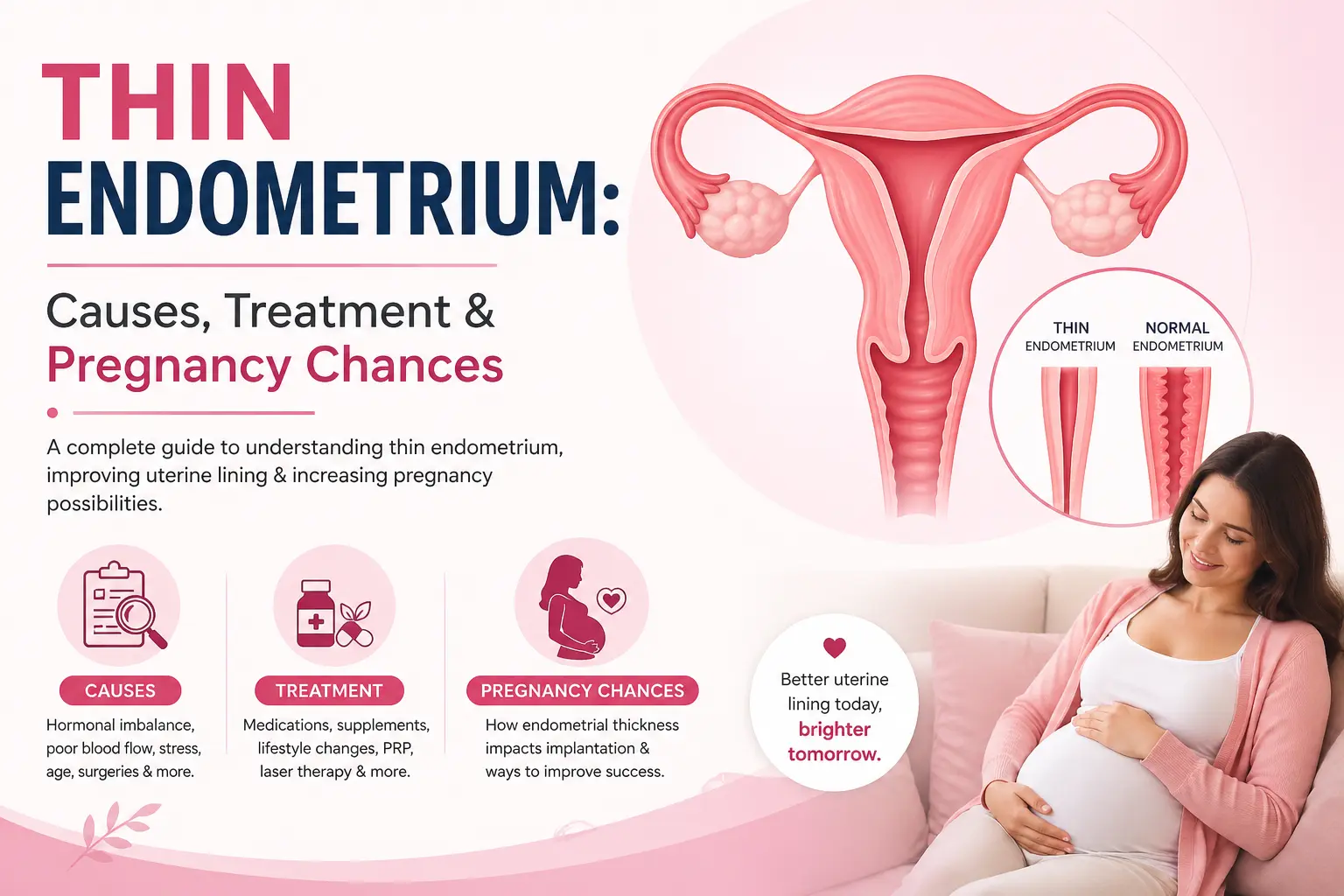
Thin endometrium is a common yet often overlooked reason behind difficulty in conceiving. The endometrium is the inner lining of the uterus that thickens every month to support implantation of a fertilized egg. When this lining remains too thin, it can affect the chances of pregnancy.
In this blog, we’ll explain the causes, treatment options, and pregnancy chances with thin endometrium in a simple, patient-friendly way.
What is Thin Endometrium?
The endometrium plays a crucial role in fertility. For successful implantation, the lining ideally should be around 7–12 mm thick during ovulation.
A condition called Thin Endometrium refers to when the uterine lining measures less than 7 mm, making it difficult for the embryo to attach and grow.
Why is Endometrial Thickness Important?
A healthy endometrial lining:
- Provides nutrients to the embryo
- Supports implantation
- Helps maintain early pregnancy
If the lining is too thin, even good-quality embryos may fail to implant, especially in treatments like IVF.
Causes of Thin Endometrium
1. Hormonal Imbalance
Estrogen is the key hormone responsible for thickening the uterine lining. Low estrogen levels can prevent proper endometrial growth.
2. Poor Blood Flow to the Uterus
Reduced blood circulation to the uterus can limit the growth of the endometrium.
3. Previous Uterine Surgeries
Procedures like D&C (dilation and curettage) or fibroid removal may damage the uterine lining.
4. Infections
Chronic infections such as endometritis can affect the quality and thickness of the lining.
5. Long-term Use of Birth Control Pills
Extended use of hormonal contraceptives may temporarily suppress endometrial growth.
6. Lifestyle Factors
Stress, poor nutrition, smoking, and low body weight can also contribute to thin lining.
Symptoms of Thin Endometrium
Thin endometrium often has no obvious symptoms, but some women may notice:
- Irregular or light periods
- Difficulty conceiving
- Repeated IVF failure
Diagnosis
Doctors usually diagnose thin endometrium through:
- Transvaginal ultrasound to measure thickness
- Hormonal blood tests
- Hysteroscopy (in some cases)
Treatment Options for Thin Endometrium
1. Estrogen Therapy
Hormonal medications are prescribed to improve endometrial growth.
2. Blood Flow Improvement
- Low-dose aspirin
- Vaginal sildenafil (in some cases)
These help increase blood supply to the uterus.
3. Platelet-Rich Plasma (PRP) Therapy
An advanced treatment where growth factors from your own blood are used to improve the lining.
4. Treating Underlying Causes
If infection or scarring is present, targeted treatment is necessary.
5. Lifestyle Modifications
- Balanced diet rich in iron and protein
- Regular exercise
- Stress management
Natural Ways to Improve Endometrial Thickness
While medical treatment is often required, supportive measures include:
- Eating foods rich in vitamin E, L-arginine, and omega-3 fatty acids
- Staying hydrated
- Gentle yoga and pelvic circulation exercises
Pregnancy Chances with Thin Endometrium
This is the most important concern for patients.
Can You Get Pregnant with Thin Endometrium?
Yes, pregnancy is still possible, but chances may be lower depending on severity.
Factors That Affect Pregnancy Chances:
- Thickness of the lining
- Age of the woman
- Egg and embryo quality
- Underlying cause
With Proper Treatment
Many women see improvement in endometrial thickness and go on to have successful pregnancies, especially with assisted treatments like IVF.
When Should You See a Doctor?
You should consult a fertility specialist if:
- You’ve been trying to conceive for 6–12 months without success
- You have repeated IVF failures
- Your ultrasound shows thin lining
Early diagnosis can significantly improve outcomes.
Expert Advice for Better Outcomes
- Don’t ignore repeated implantation failure
- Follow a personalized treatment plan
- Focus on overall reproductive health, not just one factor
Conclusion
Thin endometrium can be a challenging condition, but it is treatable in many cases. With the right medical care, lifestyle changes, and advanced fertility techniques, many women successfully conceive.
If you’re facing fertility challenges, timely evaluation and expert guidance can make a big difference in your journey to parenthood.
