
When you’re trying to conceive naturally or through IVF, one factor that often gets overlooked is the endometrial lining—the soft tissue that lines the inside of the uterus. A healthy, well-developed lining is essential for embryo implantation and a successful pregnancy.
If your doctor has told you that you have a thin endometrium, you may be wondering whether pregnancy is still possible. The good news is that many women with a thin uterine lining can successfully conceive with the right diagnosis, treatment, and fertility care.
In this guide, we’ll explain what a thin endometrium is, its causes, symptoms, diagnosis, treatment options, and how improving your uterine lining can increase your chances of pregnancy.
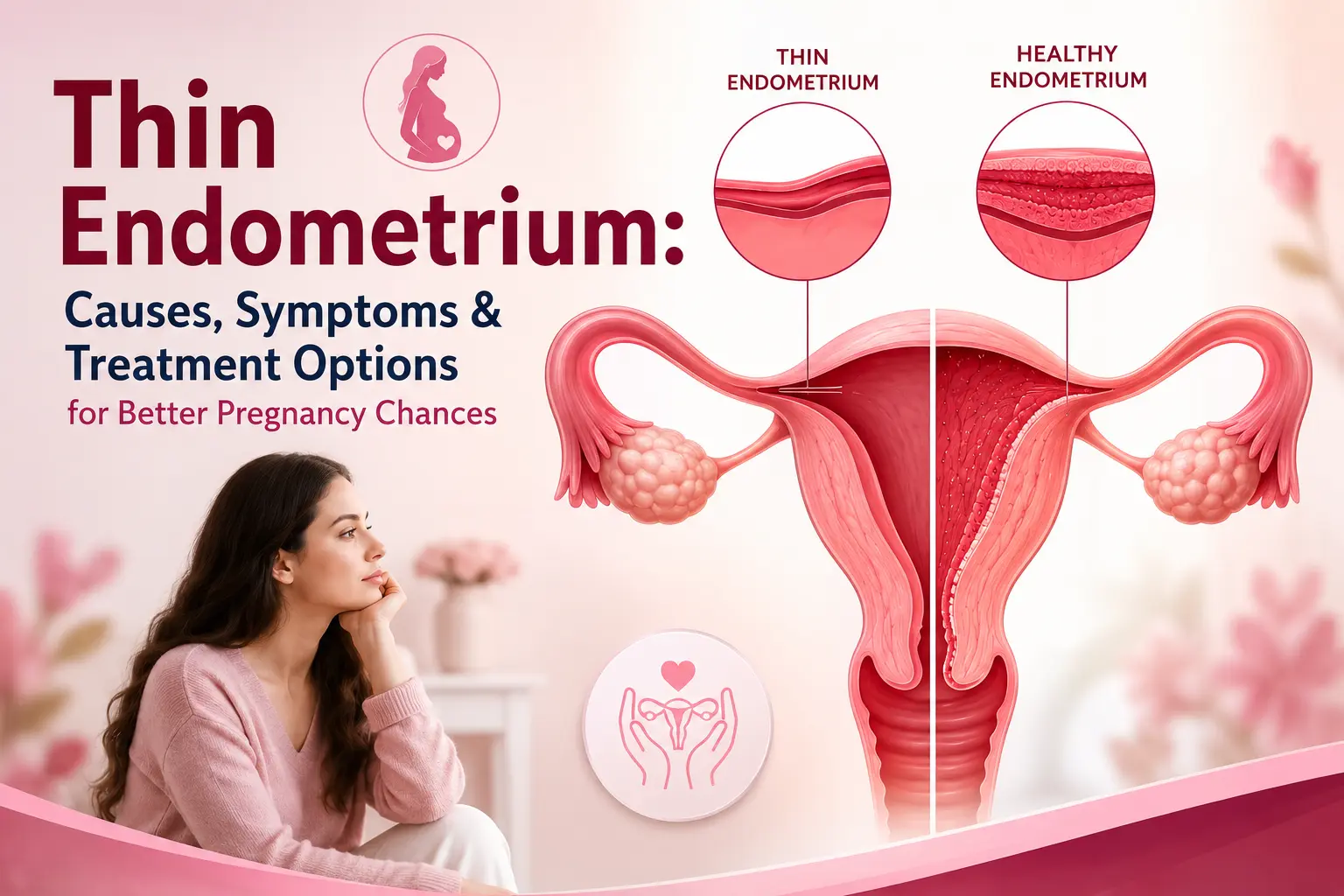
What Is a Thin Endometrium?
The endometrium is the inner lining of the uterus that thickens every month under the influence of estrogen in preparation for pregnancy.
If fertilization occurs, the embryo implants into this lining. If pregnancy does not occur, the lining sheds during menstruation.
A thin endometrium means that this lining has not developed enough to support successful embryo implantation.
Generally:
| Endometrial Thickness | Meaning |
| Less than 7 mm | Considered thin for implantation |
| 7–14 mm | Ideal thickness for pregnancy |
| Above 14–16 mm | May require evaluation depending on the menstrual phase |
While pregnancy is still possible with a thinner lining, research shows that implantation rates generally improve when the endometrium reaches an optimal thickness.
Why Is Endometrial Thickness Important for Pregnancy?
A healthy uterine lining provides:
- Nutrients for the embryo
- Oxygen-rich blood supply
- Proper hormonal support
- Space for embryo implantation
- Healthy placental development
If the lining is too thin, the embryo may struggle to implant or continue growing.
This may lead to:
- Difficulty conceiving
- Failed IVF cycles
- Recurrent implantation failure
- Early miscarriage in some cases
Common Causes of Thin Endometrium
Several medical conditions and lifestyle factors can contribute to a thin uterine lining.
1. Low Estrogen Levels
Estrogen is the hormone responsible for thickening the endometrium.
Low estrogen may occur due to:
- Poor ovarian function
- Premature ovarian insufficiency
- Hormonal imbalance
- Perimenopause
2. Poor Blood Flow to the Uterus
Reduced blood circulation means the lining doesn’t receive enough oxygen and nutrients.
Risk factors include:
- Smoking
- Diabetes
- High blood pressure
- Pelvic vascular disorders
3. Previous Uterine Surgery
Procedures such as:
- D&C (Dilation & Curettage)
- Fibroid removal
- Hysteroscopic surgery
- Repeated abortions
can sometimes damage the uterine lining.
4. Asherman’s Syndrome
Scar tissue inside the uterus can prevent normal endometrial growth.
Women may notice:
- Very light periods
- Missed periods
- Infertility
5. Chronic Endometritis
Long-standing inflammation or infection inside the uterus may affect endometrial development.
6. Certain Fertility Medications
Some medications like prolonged use of Clomiphene Citrate may occasionally reduce endometrial thickness in certain women.
7. Aging
As women age, hormone production decreases, making it more difficult for the uterine lining to grow adequately.
Symptoms of Thin Endometrium
Interestingly, many women have no obvious symptoms.
Others may experience:
- Light menstrual bleeding
- Short menstrual periods
- Difficulty conceiving
- Repeated IVF implantation failure
- Recurrent miscarriages
- Irregular periods
Often, thin endometrium is detected during fertility evaluation or ultrasound monitoring.
How Is Thin Endometrium Diagnosed?
Your gynecologist or fertility specialist may recommend:
Transvaginal Ultrasound
This is the most common test used to measure endometrial thickness during different phases of the menstrual cycle.
Doppler Ultrasound
Evaluates blood flow to the uterus and endometrium.
Hormonal Blood Tests
May include:
- Estrogen
- FSH
- LH
- AMH
- Progesterone
- Thyroid profile
- Prolactin
Hysteroscopy
A thin camera is inserted into the uterus to detect:
- Scar tissue
- Polyps
- Adhesions
- Structural abnormalities
Endometrial Evaluation
In selected patients, doctors may assess endometrial receptivity or investigate underlying inflammation.
Can You Get Pregnant with a Thin Endometrium?
Yes.
Many women with a thin endometrium conceive naturally or through fertility treatment.
Pregnancy depends on multiple factors including:
- Egg quality
- Embryo quality
- Hormonal balance
- Blood supply
- Underlying cause of the thin lining
- Age
- Overall reproductive health
The focus is not just on thickness but also on the quality and receptivity of the endometrial lining.
Treatment Options for Thin Endometrium
Treatment depends on the underlying cause.
1. Estrogen Therapy
Doctors may prescribe estrogen tablets, patches, or injections to stimulate endometrial growth.
2. Improving Blood Flow
Depending on the individual case, your fertility specialist may recommend therapies aimed at enhancing uterine blood circulation.
Lifestyle measures include:
- Regular moderate exercise
- Adequate hydration
- Quitting smoking
- Managing chronic conditions such as diabetes or hypertension
3. Treating Uterine Adhesions
If scar tissue is present, hysteroscopic surgery can remove adhesions and restore the uterine cavity.
4. Managing Infection
If chronic endometritis is diagnosed, appropriate antibiotics may improve the health of the endometrial lining.
5. Optimizing IVF Protocols
For women undergoing IVF, the fertility specialist may:
- Adjust hormonal medications
- Delay embryo transfer until the lining improves
- Freeze embryos and perform a later frozen embryo transfer (FET) when the uterus is more receptive
6. Nutritional & Lifestyle Support
Although no specific diet alone can guarantee a thicker lining, maintaining overall health may support fertility.
Focus on:
- Protein-rich foods
- Iron-rich foods
- Fruits and vegetables
- Healthy fats
- Adequate sleep
- Stress management
Always discuss supplements with your doctor before starting them.
Is Thin Endometrium Permanent?
Not always.
Many women experience significant improvement once the underlying cause is treated.
Successful treatment depends on:
- Early diagnosis
- Correct hormonal management
- Addressing uterine abnormalities
- Personalized fertility planning
When Should You See a Fertility Specialist?
Consult a gynecologist or fertility expert if you have:
- Infertility for over 12 months (or 6 months if over age 35)
- Repeated IVF implantation failure
- Recurrent miscarriages
- Very light menstrual periods
- History of uterine surgery
- Ultrasound showing a thin endometrium
Early evaluation can help identify treatable causes and improve pregnancy outcomes.
How Medfemme Women’s Clinic Can Help
At Medfemme Women’s Clinic, Hauz Khas, Dr. Tejashri Shrotri, a fellowship-trained IVF and infertility specialist, provides comprehensive evaluation and personalized treatment for women experiencing thin endometrium and other fertility concerns.
Our approach includes:
- Detailed fertility assessment
- Hormonal evaluation
- Advanced ultrasound monitoring
- Uterine cavity assessment
- Individualized IVF and fertility planning
- Evidence-based treatment tailored to each patient
Our goal is to optimize uterine health and improve your chances of achieving a healthy pregnancy.
Frequently Asked Questions (FAQs)
Is 6 mm endometrial thickness enough for pregnancy?
Some pregnancies can occur with a 6 mm lining, but implantation rates are generally higher when the endometrium measures 7–14 mm. Your doctor will evaluate your overall fertility profile rather than relying on thickness alone.
Can IVF be successful with a thin endometrium?
Yes. Many women with a thin endometrium achieve successful pregnancies after individualized treatment and optimized IVF protocols.
Does a thin endometrium always cause infertility?
No. It is one of several factors that may affect implantation. Fertility also depends on egg quality, sperm health, embryo quality, hormonal balance, and uterine health.
Can lifestyle changes improve endometrial thickness?
Healthy habits—such as regular exercise, balanced nutrition, avoiding smoking, and managing stress—support overall reproductive health. However, medical evaluation is essential to identify and treat the underlying cause of a thin endometrium.
How is thin endometrium diagnosed?
A transvaginal ultrasound is the primary method for measuring endometrial thickness. Additional tests, including hormonal assessments or hysteroscopy, may be recommended based on individual needs.
Conclusion
A thin endometrium can be challenging for women trying to conceive, but it is not the end of the journey. With timely diagnosis, appropriate treatment, and expert fertility care, many women are able to improve their endometrial lining and achieve a healthy pregnancy.
If you’ve experienced repeated implantation failure, light periods, or difficulty conceiving, don’t ignore these signs. A comprehensive fertility evaluation can help identify the cause and guide you toward the most effective treatment plan.
