
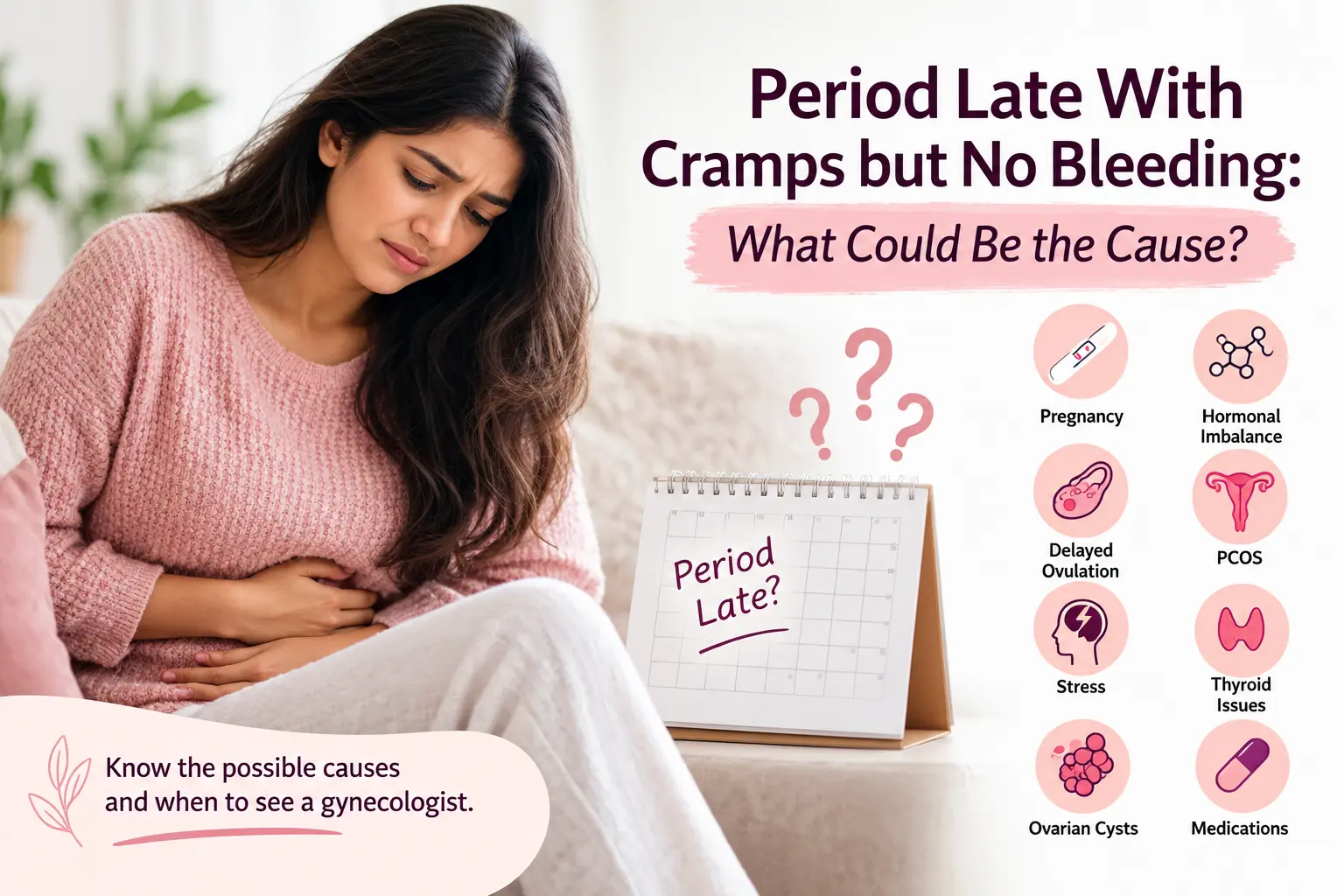
A period late with cramps but no bleeding can happen for several reasons, including pregnancy, delayed ovulation, stress, hormonal changes, PCOS, thyroid problems, or an ovarian cyst. Sometimes period-like cramps occur before bleeding starts, while in other cases, the underlying hormonal changes may delay the period.
If your period is late and you are sexually active, pregnancy should be checked first. A home pregnancy test can help determine whether the missed period and cramps could be pregnancy-related. If the test is negative but your period continues to be delayed or the pain persists, a gynecological evaluation can help identify the cause.
Quick Answer: Why Is My Period Late but I Have Cramps?
The most common causes of period late with cramps but no bleeding include:
- Early pregnancy
- Delayed or irregular ovulation
- Stress and sleep changes
- PCOS or other hormonal imbalances
- Thyroid disorders
- Changes in weight, exercise, or diet
- Ovarian cysts
- Endometriosis
- Certain medications
- Perimenopause, depending on age
Having cramps does not always mean that your period will start immediately. The uterus can produce cramp-like sensations even when menstrual bleeding has not begun.
Can Pregnancy Cause Cramps Without Period Bleeding?
Yes. Early pregnancy can cause mild abdominal or pelvic cramping without menstrual bleeding. This may happen because of hormonal changes and changes occurring in the uterus during early pregnancy.
If you have a period late with cramps but no bleeding and pregnancy is possible, consider taking a home urine pregnancy test.
For the most reliable result:
- Follow the instructions on the pregnancy test.
- Testing after the expected period is generally more useful than testing very early.
- If the test is negative but your period does not come, repeat the test after a few days or speak with a gynecologist.
- Severe pain, especially one-sided pain, requires prompt medical assessment.
1. Delayed Ovulation
Your period may be late simply because ovulation happened later than usual.
Menstrual bleeding generally occurs after ovulation. If ovulation is delayed because of stress, illness, travel, changes in sleep, weight fluctuations, or hormonal changes, the period may also arrive later.
This can create a situation where you experience PMS-like cramps but no bleeding yet.
2. PCOS and Hormonal Imbalance
Polycystic ovary syndrome (PCOS) is a common hormonal condition that can affect ovulation and menstrual regularity.
Women with PCOS may experience:
- Late or missed periods
- Irregular cycles
- Acne
- Excess facial or body hair
- Weight changes
- Difficulty conceiving
If late periods happen repeatedly, especially along with other symptoms of hormonal imbalance, a gynecological consultation can help determine whether PCOS or another hormonal condition is involved.
3. Stress Can Delay Your Period
Emotional stress can affect the hormones involved in ovulation. Significant stress may delay ovulation, which can subsequently make your period late.
Changes in sleep, work routine, travel, eating patterns, or intense physical activity can also affect the menstrual cycle.
Therefore, occasional cycle variation does not necessarily indicate a serious problem.
4. Thyroid Problems
The thyroid plays an important role in reproductive hormones and menstrual cycles.
Both an underactive and overactive thyroid can contribute to menstrual changes. Symptoms such as unusual tiredness, changes in weight, feeling unusually cold or hot, hair changes, or persistent menstrual irregularity may warrant thyroid evaluation.
5. Ovarian Cysts
Some ovarian cysts can develop as part of the normal menstrual cycle. Certain cysts may interfere with ovulation and can sometimes cause:
- Delayed periods
- Pelvic discomfort
- Cramping
- Bloating
- Pain during intercourse
Most functional ovarian cysts resolve naturally, but persistent or significant pain should be evaluated by a gynecologist.
6. Endometriosis
Endometriosis occurs when tissue similar to the lining of the uterus grows outside the uterus. It can cause pelvic pain and painful periods and may also affect fertility.
If cramps are frequent, severe, or interfere with daily activities, especially if they occur around your menstrual cycle, an evaluation for conditions such as endometriosis may be appropriate.
What Should You Do If Your Period Is Late With Cramps?
If you have a period late with cramps but no bleeding, the next step depends on your symptoms and pregnancy possibility.
If pregnancy is possible
Take a home pregnancy test. If it is negative and your period remains absent, repeat testing after a few days or consult a gynecologist.
If pregnancy is unlikely
Monitor your cycle and consider recent changes such as:
- Stress
- Travel
- Poor sleep
- Weight gain or weight loss
- Increased exercise
- Recent illness
- New medicines
If late periods happen repeatedly, don’t ignore the pattern.
When Should You See a Gynecologist?
Consult a gynecologist if:
- Your period is repeatedly late or missed
- Your cycles have suddenly become irregular
- You have persistent pelvic pain or cramps
- You have repeated negative pregnancy tests but no period
- You are trying to conceive
- You have symptoms suggesting PCOS or thyroid problems
- Your menstrual changes are affecting your daily life
A doctor may recommend a pregnancy test, pelvic examination, blood tests, hormone evaluation, thyroid testing, or pelvic ultrasound depending on your symptoms.
Is It Normal to Have Cramps Before Your Period?
Yes. Mild cramps can occur before menstruation because hormonal changes can cause the uterus to contract.
However, cramps without bleeding do not confirm that your period is about to start. Similar symptoms can occur with early pregnancy, delayed ovulation, ovarian cysts, and other gynecological conditions.
The important factor is whether the symptoms are occasional and mild or persistent, severe, or associated with other symptoms.
Period Late With Cramps but No Bleeding: When Is It an Emergency?
Seek urgent medical care if you have severe or worsening abdominal/pelvic pain, particularly if it is mainly on one side, or if you have dizziness, fainting, shoulder-tip pain, or unusual vaginal bleeding and pregnancy is possible.
These symptoms can require urgent evaluation, including assessment for an ectopic pregnancy.
Frequently Asked Questions
How many days can a period be late with cramps?
A menstrual cycle can vary from month to month, so being a few days late does not necessarily indicate a problem. However, if your period is repeatedly delayed or the cramps are unusual or severe, consult a gynecologist.
Can you have cramps and no period but not be pregnant?
Yes. Delayed ovulation, PCOS, stress, thyroid disorders, ovarian cysts, and other hormonal or gynecological conditions can cause cramps or pelvic discomfort without immediate menstrual bleeding.
Should I take a pregnancy test if my period is late and I have cramps?
If pregnancy is possible, taking a home pregnancy test is a reasonable first step. If the result is negative but your period remains absent, repeat the test after a few days or consult a healthcare professional.
Why do I feel like my period is coming but there is no blood?
Period-like cramps can occur because of hormonal changes around ovulation or menstruation. Similar sensations can also occur during early pregnancy or with conditions such as ovarian cysts and endometriosis.
When is a late period a concern?
An occasional late period is often not concerning. Repeated missed or irregular periods, persistent pain, or difficulty conceiving should be discussed with a gynecologist.
Conclusion
A period late with cramps but no bleeding does not have one single cause. Pregnancy, delayed ovulation, PCOS, stress, thyroid problems, ovarian cysts, and other hormonal or gynecological conditions can all contribute.
If pregnancy is possible, start with a pregnancy test. If your period remains absent, the cramps continue, or irregular cycles are becoming frequent, a gynecological evaluation can help identify the underlying cause and guide appropriate treatment.
Get Personalized Women’s Health Care in South Delhi
At Medfemme Women’s Clinic, Hauz Khas, South Delhi, menstrual irregularities, PCOS, hormonal concerns, fertility issues, and other gynecological problems can be evaluated with a personalized approach. Dr. Tejashri Shrotri, Fellowship-trained in Reproductive Medicine, provides gynecological and fertility care based on individual symptoms and medical history.
Book a consultation at Medfemme Women’s Clinic if your late periods or cramps are persistent, recurrent, or concerning.
