
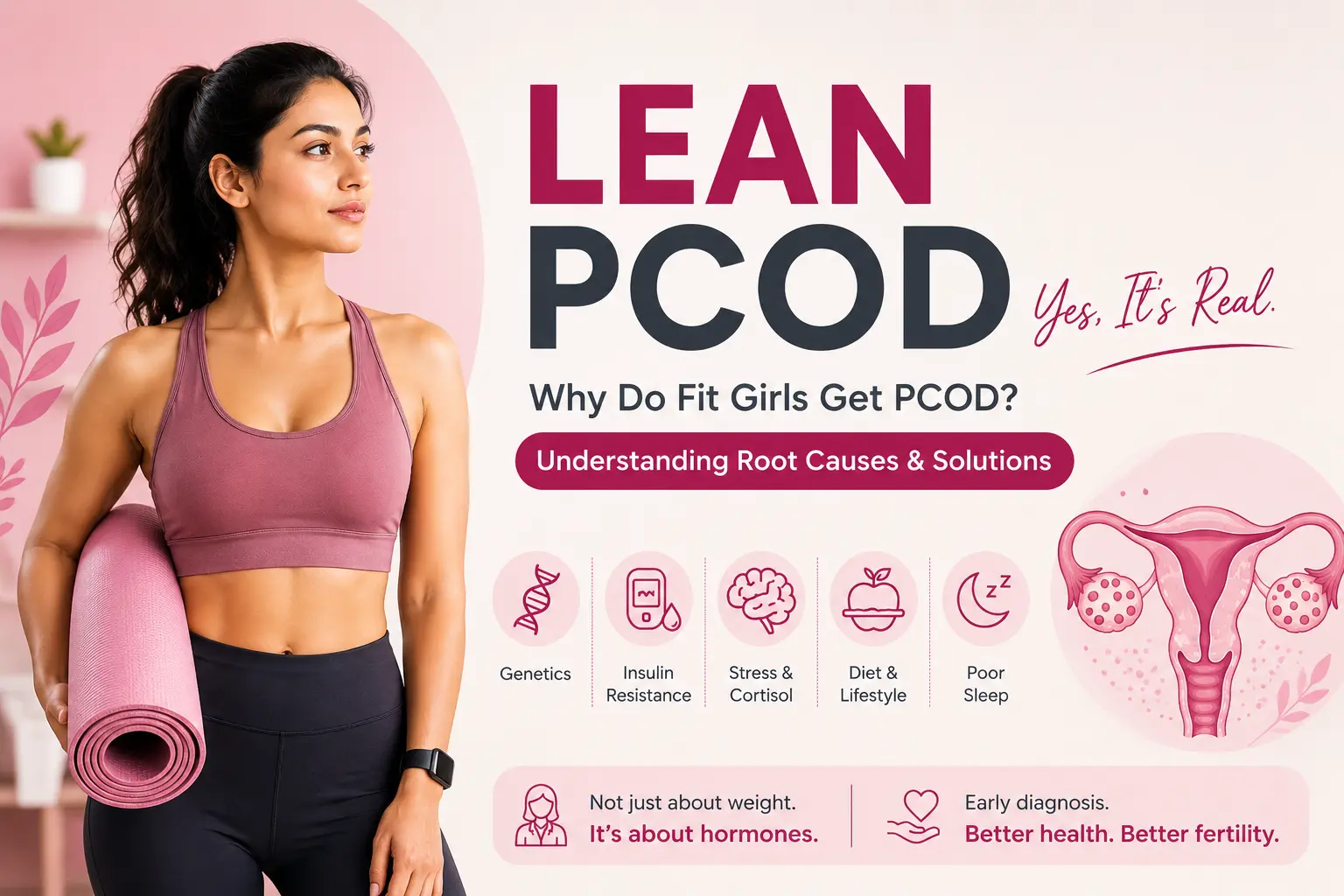
If you exercise regularly, eat clean, and still hear the words “you have PCOD” from your doctor, you are not alone — and you are not imagining it. Lean PCOD (also called Lean PCOS) is a real and increasingly common condition where slim, fit, and healthy-looking women develop Polycystic Ovarian Disease despite having a normal body weight. This blog breaks down why fit women get Lean PCOD, what causes it, and what you can do about it.
What Is Lean PCOD?
Lean PCOD is a form of Polycystic Ovarian Disease that occurs in women with a Body Mass Index (BMI) in the normal or even underweight range. Unlike the more commonly discussed “overweight PCOD,” Lean PCOD is often missed during diagnosis because doctors and patients alike associate PCOD with weight gain. In reality, PCOD is a hormonal condition — not a weight condition — and it can affect anybody, regardless of how fit they look on the outside.
Why Do Fit Women Get PCOD? The Root Causes
1. Insulin Resistance Without Weight Gain
Most people link insulin resistance to excess weight, but it can exist in lean bodies too. In Lean PCOD, cells become resistant to insulin’s effects even though total body fat is low. This triggers the ovaries to produce excess androgens (male hormones), leading to irregular periods, acne, and unwanted hair growth — classic signs of PCOD in fit women.
2. Genetics and Family History
If your mother, sister, or aunt has PCOD, your risk increases significantly, regardless of your own weight or fitness level. Lean PCOD often runs in families, suggesting a strong genetic component that no amount of diet or exercise can fully override.
3. Chronic Stress and Cortisol Overload
Fit women often lead high-performance lives — demanding careers, intense workout schedules, and packed routines. This constant stress raises cortisol levels, which disrupts the delicate balance of reproductive hormones. Elevated cortisol is one of the most overlooked root causes of Lean PCOD.
4. Over-Exercising and Under-Eating
Ironically, the very habits meant to keep you healthy can trigger Lean PCOD. Intense exercise combined with insufficient calorie intake can confuse the body into a “survival mode,” disrupting ovulation and menstrual regularity. This is sometimes referred to as Relative Energy Deficiency in Sport (RED-S), and it closely mimics or worsens PCOD symptoms.
5. Hidden Inflammation
Even without visible weight gain, low-grade chronic inflammation can exist inside the body due to poor gut health, processed foods, or environmental toxins. This inflammation interferes with ovulation and hormone signaling, contributing to Lean PCOD.
6. Thyroid Imbalances
An underactive or overactive thyroid can closely mimic or coexist with PCOD symptoms. Many fit women with Lean PCOD are later found to have an undiagnosed thyroid issue affecting their menstrual cycle and metabolism.
7. Endocrine-Disrupting Chemicals
Everyday exposure to plastics, certain cosmetics, and processed packaged foods can introduce endocrine-disrupting chemicals into the body. These chemicals interfere with normal hormone function and are an emerging area of research in Lean PCOD cases.
8. Poor Sleep Quality
Irregular sleep patterns, common among working professionals and fitness enthusiasts who wake up early to train, can disturb the hormones that regulate ovulation, adding another layer to the development of Lean PCOD.
Common Symptoms of Lean PCOD to Watch For
- Irregular or missed periods despite a healthy weight
- Acne, especially along the jawline
- Excess facial or body hair (hirsutism)
- Thinning hair on the scalp
- Difficulty conceiving
- Mood swings and fatigue despite an active lifestyle
Why Lean PCOD Often Goes Undiagnosed
Because Lean PCOD does not fit the stereotypical image associated with PCOD, many fit women are dismissed or misdiagnosed for years. Doctors may focus on weight-based indicators and overlook hormonal blood tests or ultrasound findings that would confirm PCOD in a slim patient. This delay can affect long-term fertility and metabolic health, making early awareness essential.
Frequently Asked Questions
Can a fit and slim woman really have PCOD? Yes. PCOD is a hormonal disorder, not solely a weight-related condition. Lean women can absolutely develop PCOD due to insulin resistance, genetics, stress, or thyroid imbalances.
Does Lean PCOD affect fertility? Yes, Lean PCOD can affect ovulation and menstrual regularity, which may impact fertility. Early diagnosis and the right treatment plan significantly improve conception outcomes.
How is Lean PCOD diagnosed? Diagnosis typically involves a combination of menstrual history, hormonal blood tests, and a pelvic ultrasound — not just BMI or physical appearance.
Can Lean PCOD be managed without medication? In many cases, addressing root causes such as stress, sleep, exercise intensity, and nutrition can meaningfully improve symptoms, though some women may also need medical management under a specialist’s guidance.
When Should You See a Specialist?
If you are fit, eat well, and still experience irregular periods, unexplained acne, hair thinning, or difficulty conceiving, it is worth consulting a gynecologist or fertility specialist for proper hormonal evaluation. Lean PCOD is highly manageable once correctly identified, and early intervention makes a significant difference in long-term reproductive health.
If you’re experiencing symptoms of Lean PCOD or have concerns about your fertility health, book a consultation with our team at MedFemme Fertility for a thorough hormonal evaluation and personalized care plan.
