
Introduction
Fallopian tube blockage is one of the leading causes of female infertility, contributing to nearly 25–35% of cases where women struggle to conceive. The fallopian tubes play a vital role in natural pregnancy — carrying the egg from the ovary to the uterus while allowing fertilization to take place. When a fallopian tube blockage prevents the egg and sperm from meeting, natural conception becomes difficult or even impossible without treatment. The good news is that early evaluation, combined with modern fertility care, can significantly improve pregnancy outcomes for women with this condition.
What Is Fallopian Tube Blockage?
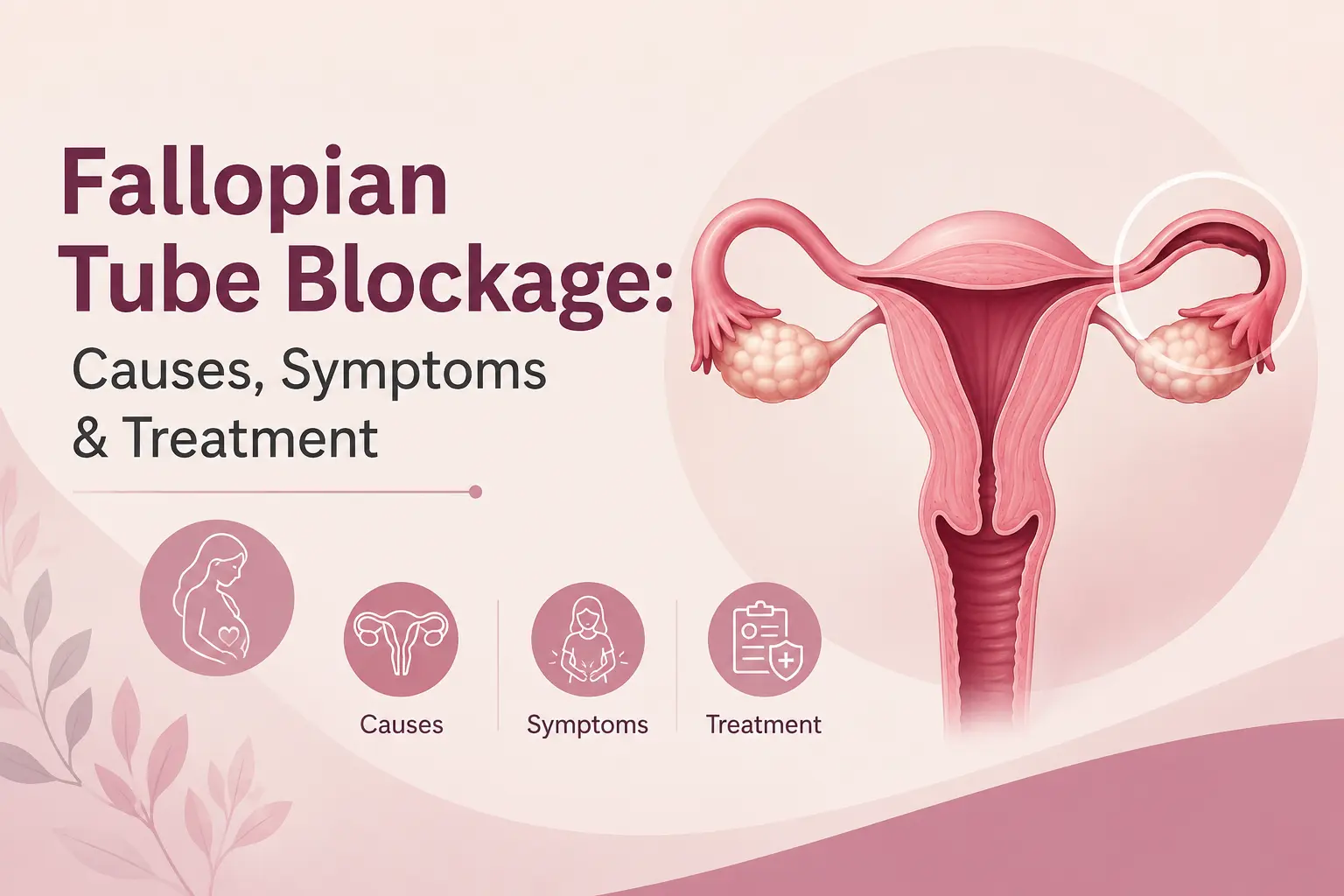
Fallopian tube blockage occurs when one or both fallopian tubes — the thin passages connecting the ovaries to the uterus — become partially or completely obstructed. Every month, the egg released from the ovary travels through this tube, where it meets the sperm and gets fertilized before moving toward the uterus. If a fallopian tube blockage is present, sperm may not reach the egg, the fertilized egg may fail to travel into the uterus, and the risk of ectopic pregnancy can increase. Blockage may occur near the uterus, in the middle of the tube, or close to the ovary, and it can affect one tube (unilateral) or both (bilateral).
Causes of Fallopian Tube Blockage
Pelvic Inflammatory Disease (PID): Untreated infections of the reproductive organs can damage the tubes, causing scar tissue and blockage.
Sexually Transmitted Infections (STIs): Infections like chlamydia and gonorrhea often go unnoticed but can silently scar the fallopian tubes over time.
Genital Tuberculosis (TB): A significant cause of tubal infertility in India, where TB bacteria attack the uterus and tubes, causing internal adhesions.
Endometriosis: Uterine-like tissue growing outside the uterus can attach to the fallopian tubes, forming scar tissue that leads to blockage.
Previous Surgery or Ectopic Pregnancy: Past abdominal surgeries (C-section, appendix removal, fibroid or cyst surgery) or a prior ectopic pregnancy can leave scarring that obstructs the tube.
Congenital Abnormalities: Some women are born with structural differences in the fallopian tubes that affect their function.
Symptoms of Fallopian Tube Blockage
Most women with fallopian tube blockage have no noticeable symptoms and remain unaware until they try to conceive. When symptoms do appear, they may include pelvic pain, painful periods, pain during intercourse, unusual vaginal discharge, recurrent pelvic infections, or a history of ectopic pregnancy. Because symptoms are often absent, fertility evaluation is recommended after one year of trying to conceive without success — or six months if you are above 35.
How Is Fallopian Tube Blockage Diagnosed?
Hysterosalpingography (HSG): The most common test, where a special dye is passed through the cervix and tracked with X-ray imaging to check whether it flows freely through the tubes.
Sonosalpingography (SSG): An ultrasound-based alternative using saline or contrast to evaluate tubal patency without radiation exposure.
Laparoscopy: Considered the gold standard. A small camera inserted through a tiny abdominal incision allows direct visualization of the tubes and can treat certain blockages in the same procedure.
Fertility Ultrasound: While it cannot diagnose all tubal blockages directly, it helps identify related conditions like hydrosalpinx, ovarian cysts, or endometriosis.
Treatment Options for Fallopian Tube Blockage
Treatment depends on the location, severity, and underlying cause of the blockage. If an active infection is responsible, antibiotics may resolve it before further fertility treatment is needed. For structural blockages, laparoscopic surgery can remove scar tissue, open the tubes, or treat endometriosis, with success depending on the extent of damage. For blockages near the uterus, tubal cannulation — inserting a thin catheter to clear the obstruction — is a minimally invasive option. When both tubes are severely blocked or surgery is unlikely to succeed, IVF (In Vitro Fertilization) offers the highest chance of pregnancy by bypassing the fallopian tubes entirely — fertilizing the egg outside the body and transferring the embryo directly into the uterus.
Can You Get Pregnant with Fallopian Tube Blockage?
Yes, depending on severity. If one tube remains healthy, natural conception is often still possible, though it may take longer. Partial blockages may respond to medical or surgical treatment, while complete bilateral blockage usually requires IVF. Early diagnosis significantly improves the chances of successful treatment, and every woman’s fertility journey deserves individualized evaluation.
Can Fallopian Tube Blockage Be Prevented?
While not every case is preventable, risk can be reduced by treating pelvic infections promptly, practicing safe sex, scheduling regular gynecological check-ups, seeking early treatment for endometriosis, and avoiding delays in addressing pelvic pain. Early medical care goes a long way in preventing permanent tubal damage.
Frequently Asked Questions
Can blocked fallopian tubes open on their own? In most cases, no. Complete fallopian tube blockage rarely resolves without medical evaluation and treatment.
Is fallopian tube blockage painful? Not always. Many women experience no symptoms, while others feel pelvic pain, particularly when infection or endometriosis is involved.
Can IVF work with blocked fallopian tubes? Yes. IVF is one of the most effective treatments precisely because it bypasses the blocked tubes completely.
Is surgery always necessary? No. Treatment depends on the cause and severity — some women benefit from minimally invasive procedures, while others achieve better outcomes directly through IVF.
When Should You See a Fertility Specialist?
Consult a fertility specialist if you’ve been trying to conceive for over a year (six months if above 35), have a history of PID, endometriosis, or pelvic surgery, have experienced an ectopic pregnancy, or if an HSG suggests fallopian tube blockage. Timely diagnosis allows for the right treatment before fertility is further affected.
Conclusion
A fallopian tube blockage can feel overwhelming, but it remains one of the most treatable causes of female infertility. With advances in diagnostics, minimally invasive surgery, and IVF, countless women with tubal blockage go on to achieve successful pregnancies.
If you’ve been facing difficulty conceiving or have risk factors for fallopian tube blockage, book a consultation with our team at MedFemme Fertility for a thorough evaluation and a personalized treatment plan.
