
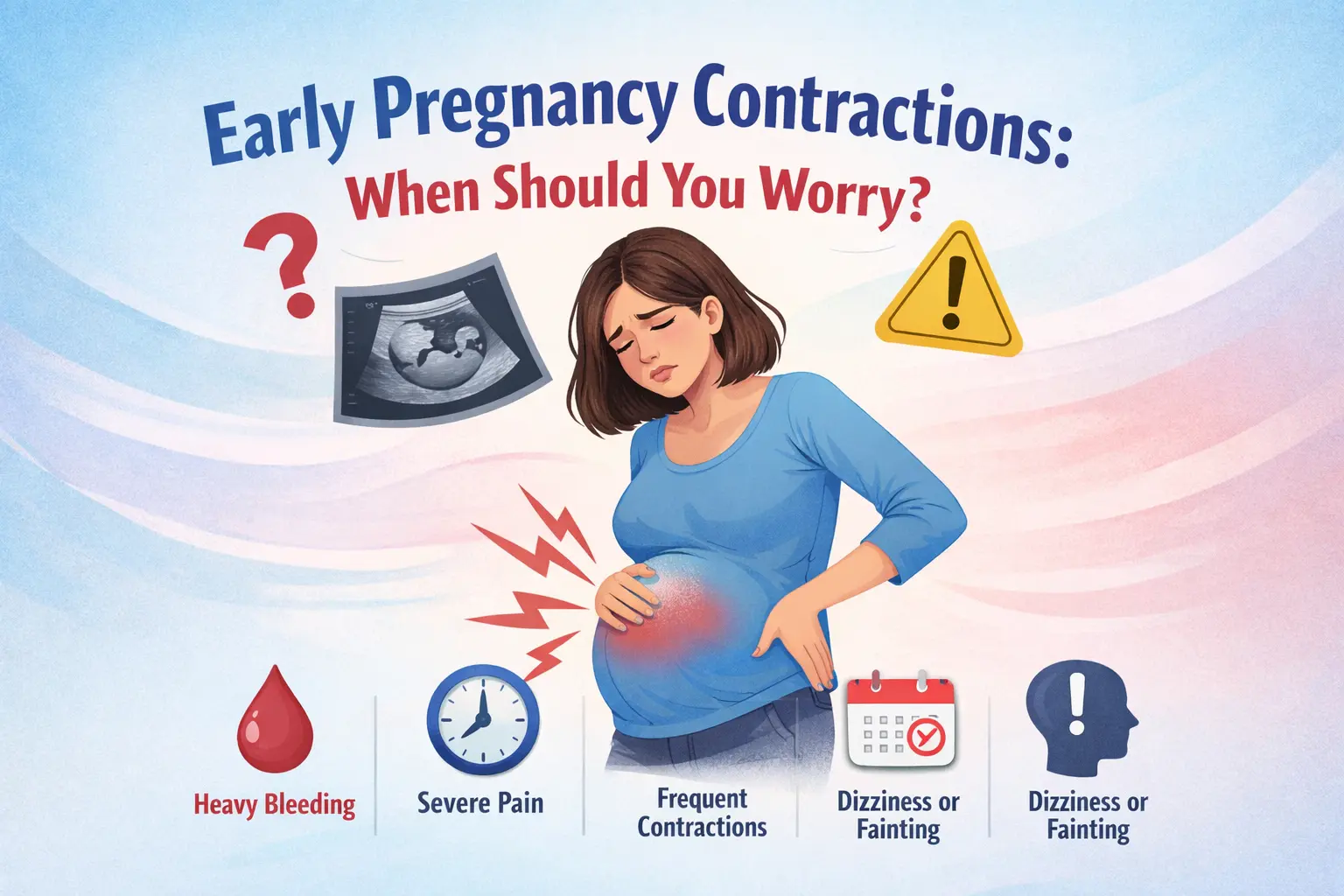
Early pregnancy contractions can be confusing and sometimes worrying for many women. During the first trimester and early second trimester, your body goes through rapid hormonal and physical changes to support the growing baby. Because of these changes, mild uterine tightening or cramp-like sensations may occur.
While some early pregnancy contractions are completely normal, others may indicate a medical concern that needs immediate attention. Understanding the difference between normal uterine activity and warning signs can help you stay calm and seek medical care when necessary.
At Medfemme Women’s Clinic, Hauz Khas, South Delhi, we often meet patients who feel anxious about abdominal cramps or tightening during early pregnancy. In this guide, we explain why early pregnancy contractions happen, when they are normal, and when you should consult a doctor.
What Are Early Pregnancy Contractions?
Early pregnancy contractions refer to the tightening or cramping sensation in the uterus during the early stages of pregnancy. These contractions can feel similar to menstrual cramps or mild abdominal discomfort.
They usually occur because the uterus is expanding and adjusting to accommodate the developing embryo.
Common sensations include:
- Mild lower abdominal cramps
- Tightening or pulling feeling in the uterus
- Short-lasting discomfort in the pelvic region
- Occasional back pain
In most cases, these sensations are mild and temporary.
Why Do Early Pregnancy Contractions Happen?
Several normal physiological changes can cause early pregnancy contractions.
1. Implantation
In very early pregnancy, the fertilized egg attaches to the uterine lining. This process can cause mild cramps known as implantation cramps.
2. Uterine Growth
As the uterus begins to expand, the surrounding muscles and ligaments stretch. This stretching can cause mild contractions or tightening.
3. Hormonal Changes
Hormones like progesterone increase significantly during pregnancy. These hormonal shifts can affect uterine muscles and cause mild cramping.
4. Increased Blood Flow to the Uterus
Pregnancy increases blood circulation in the pelvic area. This can sometimes create pressure or mild contractions.
5. Digestive Changes
Hormonal changes can slow digestion and cause gas or bloating, which may feel like uterine contractions.
Normal Early Pregnancy Contractions
Not all contractions during pregnancy indicate a problem. Many women experience harmless uterine tightening.
Normal early pregnancy contractions usually have the following characteristics:
- Mild and short-lasting
- Irregular and infrequent
- Not increasing in intensity
- No vaginal bleeding
- Relieved by rest or hydration
These contractions often occur after physical activity, dehydration, or stress.
When Should You Worry About Early Pregnancy Contractions?
Although mild contractions are common, some symptoms should never be ignored. Early pregnancy contractions may signal a complication if they occur with the following warning signs.
1. Severe or Persistent Pain
If contractions become intense, frequent, or do not improve with rest, medical evaluation is necessary.
2. Vaginal Bleeding
Contractions accompanied by bleeding or spotting may indicate a miscarriage or other complications.
3. Lower Back Pain with Pressure
Continuous lower back pain along with pelvic pressure may be a warning sign.
4. Fever or Chills
Infections during pregnancy can sometimes trigger uterine contractions.
5. Fluid Leakage
If you notice watery discharge or fluid leakage along with contractions, it may require immediate medical attention.
If you experience any of these symptoms, consult a gynecologist immediately.
Possible Medical Causes of Early Pregnancy Contractions
In rare cases, early pregnancy contractions may indicate medical conditions that require treatment.
Miscarriage
Persistent cramps with bleeding during the first trimester can sometimes indicate pregnancy loss.
Ectopic Pregnancy
If the embryo implants outside the uterus, severe abdominal pain and contractions may occur.
Subchorionic Hematoma
Bleeding between the uterine wall and the pregnancy sac can sometimes cause cramping.
Urinary Tract Infection (UTI)
Infections in the urinary tract can trigger uterine irritation and contractions.
Early diagnosis helps prevent complications and ensures proper pregnancy care.
How to Reduce Mild Early Pregnancy Contractions
If your doctor confirms that the contractions are normal, some simple steps may help relieve discomfort.
Stay Hydrated
Dehydration can sometimes trigger uterine tightening.
Get Adequate Rest
Avoid excessive physical activity and allow your body to recover.
Maintain a Healthy Diet
Eating balanced meals helps prevent digestive discomfort that can mimic contractions.
Manage Stress
Relaxation techniques such as deep breathing or prenatal yoga can help reduce muscle tension.
Attend Regular Antenatal Checkups
Routine pregnancy visits help monitor both maternal and fetal health.
When to Consult a Gynecologist
You should seek medical advice if:
- Contractions become regular or painful
- There is bleeding or spotting
- Pain spreads to the back or shoulders
- You feel dizziness or weakness
- Contractions last more than an hour without relief
Early evaluation ensures that any complications are treated promptly.
Conclusion
Early pregnancy contractions are often a normal part of the body adjusting to pregnancy. Mild cramps or uterine tightening can occur due to implantation, uterine growth, or hormonal changes. However, severe pain, bleeding, or persistent contractions should never be ignored.
Understanding the difference between normal and concerning symptoms can help expectant mothers feel more confident and seek care when needed.
At Medfemme Women’s Clinic in Hauz Khas, South Delhi, we provide personalized pregnancy care, early complication screening, and expert guidance to ensure a safe and healthy pregnancy journey.
If you are experiencing unusual early pregnancy contractions, consulting an experienced gynecologist can help provide reassurance and the right treatment.
