
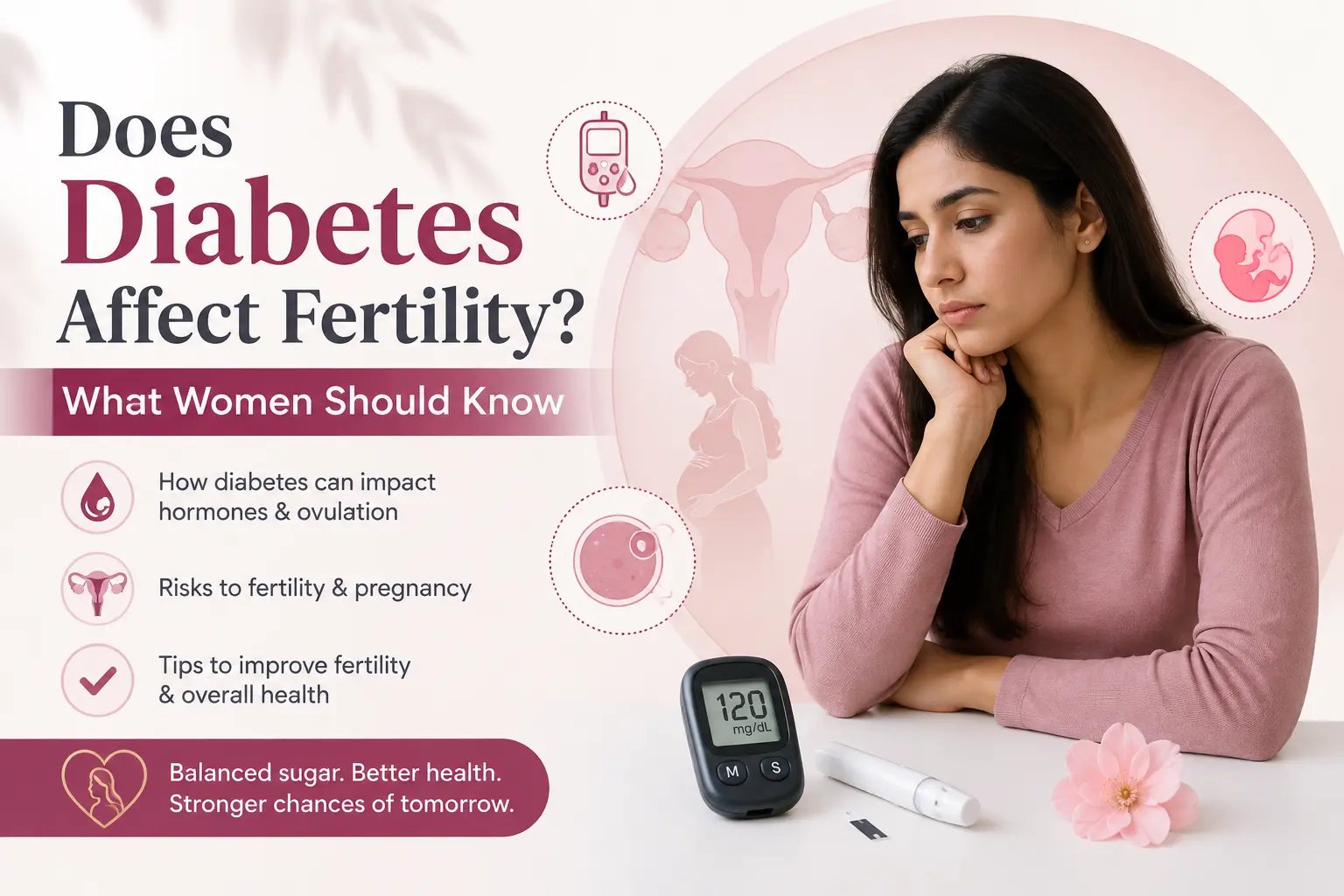
Does Diabetes Affect Fertility?
Does diabetes affect fertility? This is one of the most common questions women ask when they’re planning pregnancy. The answer is yes—diabetes can affect fertility, but with proper blood sugar control and expert medical care, many women with diabetes successfully conceive and have healthy pregnancies.
Whether you have Type 1 diabetes, Type 2 diabetes, or prediabetes, uncontrolled blood sugar can interfere with hormones, ovulation, egg quality, and pregnancy outcomes. Understanding does diabetes affect fertility is the first step toward improving your reproductive health.
If you’re trying to conceive and have diabetes, this guide explains everything you need to know.
How Does Diabetes Affect Fertility?
The biggest reason diabetes affects fertility is because high blood sugar disrupts the body’s hormonal balance.
When blood glucose remains elevated for long periods, it can:
- Affect regular ovulation
- Reduce egg quality
- Cause irregular menstrual cycles
- Increase insulin resistance
- Increase inflammation in the body
- Make implantation more difficult
This is why many women wonder, does diabetes affect fertility even if periods are regular? The answer is yes. Even with regular cycles, poor blood sugar control may reduce the chances of natural conception.
Can Diabetes Cause Difficulty Getting Pregnant?
Yes. Does diabetes affect fertility enough to delay pregnancy? It certainly can.
Women with uncontrolled diabetes may experience:
- Irregular ovulation
- Delayed ovulation
- Missed periods
- Poor egg development
- Hormonal imbalance
These factors reduce the chances of pregnancy naturally.
Women with PCOS and diabetes often experience even greater fertility challenges because insulin resistance affects both conditions.
Diabetes and PCOS: A Common Combination
Many women diagnosed with PCOS also develop insulin resistance.
Since insulin resistance increases androgen (male hormone) production, it can lead to:
- Irregular periods
- Lack of ovulation
- Weight gain
- Difficulty conceiving
This explains why doctors often discuss does diabetes affect fertility when treating women with PCOS.
Managing insulin resistance often improves ovulation naturally.
Symptoms That May Indicate Diabetes Is Affecting Fertility
If you’re trying to conceive, watch for these warning signs:
- Irregular menstrual cycles
- Difficulty getting pregnant after 6–12 months
- Recurrent miscarriages
- Unexplained weight gain
- Increased thirst
- Frequent urination
- Fatigue
- High blood sugar reports
These symptoms don’t always mean infertility, but they should be evaluated by a fertility specialist.
Can Diabetes Increase the Risk of Miscarriage?
Yes.
Poorly controlled diabetes can increase the risk of:
- Early miscarriage
- Birth defects
- Pregnancy complications
- High blood pressure
- Gestational diabetes
- Premature delivery
The good news is that maintaining healthy blood sugar levels before conception significantly lowers these risks.
Does Diabetes Affect Egg Quality?
Research suggests that uncontrolled diabetes may affect:
- Egg maturation
- Egg quality
- Embryo development
- Implantation
This doesn’t mean pregnancy isn’t possible—it simply means that blood sugar optimization becomes an important part of fertility planning.
Does Diabetes Affect IVF Success?
Many couples ask whether does diabetes affect fertility treatments like IVF?
The answer is yes—but success rates improve significantly when diabetes is well managed.
Before IVF, fertility specialists usually recommend:
- HbA1c testing
- Blood sugar optimization
- Weight management
- Nutrition counseling
- Hormonal evaluation
Women with controlled diabetes often achieve IVF success rates comparable to those without diabetes.
Tests Your Fertility Specialist May Recommend
If you’re trying to conceive with diabetes, your doctor may advise:
Blood Sugar Tests
- HbA1c
- Fasting Blood Sugar
- Postprandial Blood Sugar
Fertility Tests
- AMH Test
- Ovulation Monitoring
- Thyroid Profile
- Ultrasound Scan
- Hormone Evaluation
These investigations help determine whether diabetes is affecting your reproductive health.
Can Fertility Improve After Diabetes Is Controlled?
Absolutely.
Many women notice improved fertility after:
- Better blood sugar control
- Healthy eating
- Regular exercise
- Weight loss (if recommended)
- Treatment of insulin resistance
- Proper medications
Improved metabolic health often restores ovulation and increases natural pregnancy chances.
Lifestyle Tips to Improve Fertility with Diabetes
Simple lifestyle changes can make a significant difference.
Eat a Balanced Diet
Choose:
- Whole grains
- Fresh vegetables
- Lean proteins
- Healthy fats
- Low-glycemic fruits
Avoid:
- Sugary drinks
- Refined carbohydrates
- Processed snacks
- Excess sweets
Exercise Regularly
Aim for:
- 30–45 minutes of walking
- Yoga
- Strength training
- Cycling
- Swimming
Exercise improves insulin sensitivity and supports hormonal balance.
Maintain a Healthy Weight
Even a modest weight reduction can:
- Improve ovulation
- Enhance egg quality
- Lower insulin resistance
- Increase pregnancy chances
Manage Stress
Stress affects reproductive hormones.
Helpful practices include:
- Meditation
- Deep breathing
- Adequate sleep
- Counseling if needed
When Should You See a Fertility Specialist?
You should consult a specialist if:
- You’ve been trying for pregnancy for over one year (or six months if over age 35)
- You have diabetes with irregular periods
- You have PCOS and diabetes
- You’ve experienced recurrent miscarriages
- Your HbA1c remains high despite treatment
- You’re planning IVF or fertility treatment
Early evaluation can improve outcomes and reduce delays.
Frequently Asked Questions (FAQs)
Does diabetes affect fertility in women?
Yes. Uncontrolled diabetes can interfere with ovulation, egg quality, hormone balance, and implantation, making conception more difficult.
Can I get pregnant naturally if I have diabetes?
Yes. Many women with well-controlled diabetes conceive naturally and have healthy pregnancies.
Does insulin resistance cause infertility?
Insulin resistance can contribute to irregular ovulation, especially in women with PCOS, increasing the risk of infertility.
Does diabetes affect IVF success?
Diabetes can affect IVF outcomes if blood sugar is poorly controlled. Optimizing glucose levels before treatment improves success rates.
Can controlling diabetes improve fertility?
Yes. Better blood sugar control often improves ovulation, hormone balance, and pregnancy outcomes.
Conclusion
So, does diabetes affect fertility? The answer is yes—but it doesn’t mean pregnancy is out of reach. With early diagnosis, good blood sugar control, healthy lifestyle changes, and expert fertility care, many women with diabetes successfully conceive and deliver healthy babies.
If you’re planning pregnancy and have diabetes or insulin resistance, don’t wait. A personalized fertility assessment can help identify any challenges early and guide you toward the safest and most effective treatment plan.
