
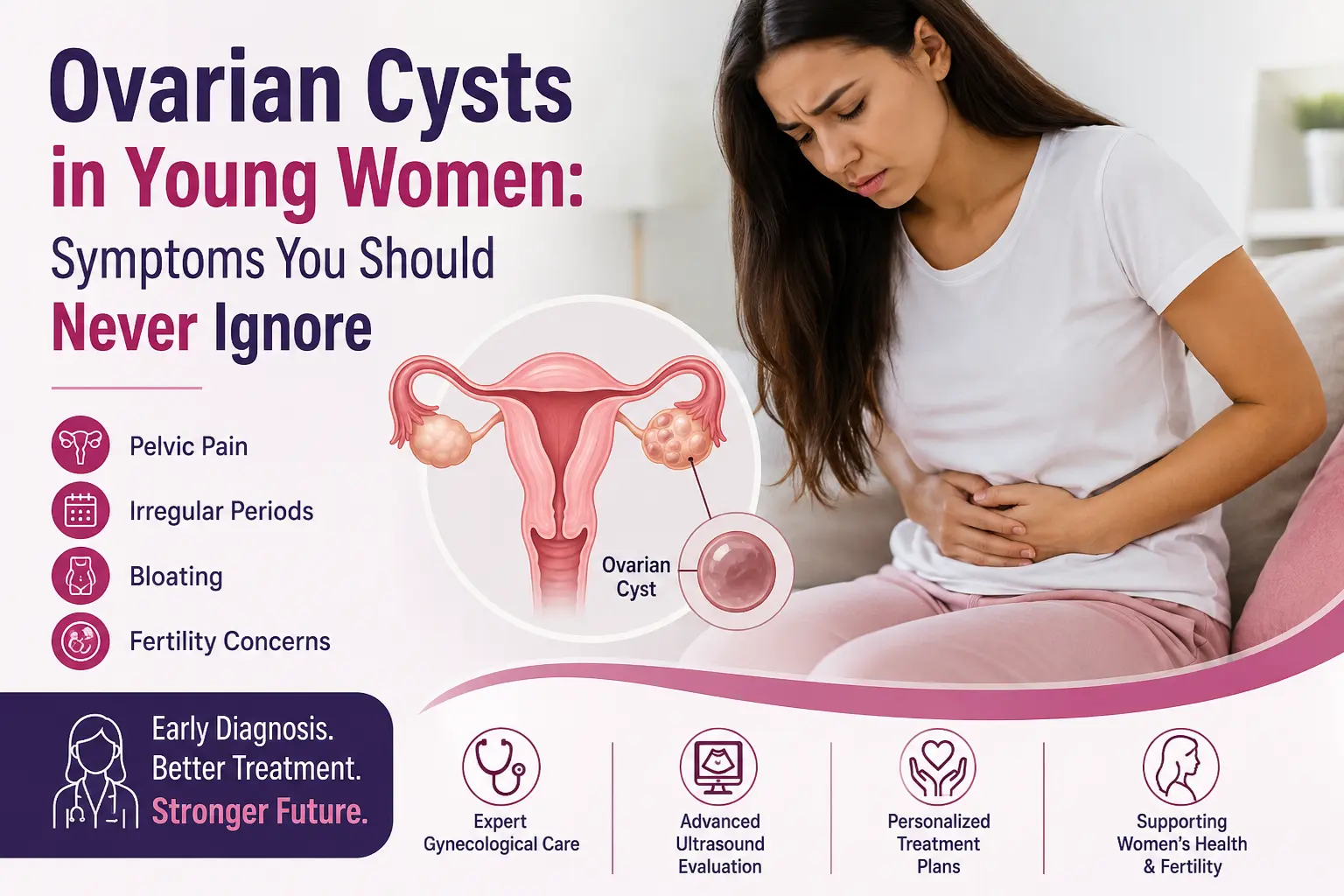
Ovarian cysts are one of the most common gynecological conditions affecting young women today. While many cysts are harmless and disappear naturally, some can lead to severe pelvic pain, irregular periods, hormonal imbalance, and fertility concerns if ignored.
Many women mistake ovarian cyst symptoms for normal menstrual discomfort and delay medical evaluation. However, early diagnosis through gynecological examination and ultrasound evaluation can help prevent complications and ensure better reproductive health.
At Medfemme Women’s Clinic in Hauz Khas, South Delhi, women receive personalized and evidence-based care for ovarian cysts, hormonal disorders, PCOS, irregular periods, and fertility concerns under the guidance of Dr. Tejashri Shrotri.
What Are Ovarian Cysts?
Ovarian cysts are fluid-filled sacs that develop on or inside the ovaries. The ovaries are part of the female reproductive system and play an important role in hormone production and ovulation.
Most ovarian cysts are benign (non-cancerous) and may resolve on their own. However, certain cysts may grow larger, rupture, or interfere with hormonal balance and fertility.
Common Types of Ovarian Cysts
1. Functional Cysts
These are the most common ovarian cysts and usually form during the menstrual cycle.
- Follicular cysts
- Corpus luteum cysts
They often disappear naturally within a few months.
2. PCOS-Related Cysts
Women with Polycystic Ovary Syndrome may develop multiple small cysts due to hormonal imbalance and irregular ovulation.
3. Dermoid Cysts
These cysts can contain tissue like hair, skin, or fat and may require surgical removal if they grow larger.
4. Endometriomas
These cysts are linked to Endometriosis and can affect fertility.
Ovarian Cyst Symptoms You Should Never Ignore
Many ovarian cysts remain silent initially, but certain symptoms should never be ignored.
1. Persistent Pelvic Pain
Pelvic pain is one of the most common ovarian cyst symptoms. The pain may:
- Occur on one side
- Feel sharp or dull
- Worsen during periods
- Increase during physical activity
Severe sudden pelvic pain may indicate cyst rupture or ovarian torsion, which requires immediate medical attention.
2. Irregular Periods
Hormonal imbalance caused by ovarian cysts may lead to:
- Delayed periods
- Heavy bleeding
- Spotting between periods
- Missed periods
Young women often ignore irregular periods assuming stress is the only reason, but persistent cycle changes should always be evaluated.
3. Bloating and Abdominal Fullness
Large cysts may create pressure inside the abdomen, leading to:
- Bloating
- Feeling full quickly
- Lower abdominal heaviness
- Tightness around the pelvic area
4. Pain During Intercourse
Pain during intimacy can occur if the cyst presses against surrounding pelvic structures.
This symptom is often overlooked but can indicate growing ovarian cysts or associated conditions like endometriosis.
5. Frequent Urination
A larger cyst may press against the bladder, causing:
- Frequent urination
- Difficulty emptying the bladder completely
- Pelvic pressure
6. Sudden Severe Pain with Nausea
This can be a medical emergency.
Seek immediate gynecological care if you experience:
- Sudden sharp pelvic pain
- Vomiting
- Fever
- Dizziness
- Fainting
These symptoms may indicate ovarian torsion or cyst rupture.
What Causes Ovarian Cysts in Young Women?
Several hormonal and reproductive factors contribute to ovarian cyst development.
Common Causes Include:
- Hormonal imbalance
- Irregular ovulation
- PCOS
- Endometriosis
- Pregnancy-related cysts
- Severe pelvic infections
- Fertility medications
Lifestyle factors like stress, obesity, poor sleep, and insulin resistance may also affect hormonal health.
When Should You Visit a Gynecologist?
You should consult a gynecologist if:
- Pelvic pain persists for more than a few weeks
- Your periods become irregular frequently
- You experience severe menstrual cramps
- You notice bloating repeatedly
- Pain interferes with daily activities
- You are trying to conceive but facing difficulties
Women in areas like Greater Kailash, Hauz Khas, Saket, Green Park, and Defence Colony are increasingly seeking early gynecological screening for hormonal and reproductive health concerns.
How Are Ovarian Cysts Diagnosed?
Early diagnosis helps prevent complications and supports effective treatment.
Diagnostic Evaluation May Include:
Pelvic Examination
A gynecologist checks for tenderness, swelling, or pelvic abnormalities.
Ultrasound Evaluation
Pelvic ultrasound is the most important investigation used to:
- Confirm cyst presence
- Determine size
- Identify cyst type
- Assess ovarian health
Hormonal Testing
Hormonal tests may evaluate:
- Thyroid function
- Insulin resistance
- PCOS-related hormonal imbalance
Ovarian Cyst Treatment Options
Treatment depends on:
- Age
- Symptoms
- Cyst size
- Type of cyst
- Fertility goals
1. Observation and Monitoring
Small functional cysts may disappear naturally over time. Doctors may recommend:
- Follow-up ultrasounds
- Lifestyle modifications
- Symptom monitoring
2. Hormonal Medications
Birth control pills or hormonal therapies may help:
- Regulate periods
- Prevent new cyst formation
- Improve hormonal balance
3. PCOS Management
If ovarian cysts are linked to PCOS, treatment may include:
- Weight management
- Dietary changes
- Exercise
- Hormonal support
- Insulin resistance treatment
4. Minimally Invasive Surgery
Large, painful, or suspicious cysts may require laparoscopic surgery.
Modern minimally invasive gynecological surgery helps:
- Reduce recovery time
- Preserve fertility
- Minimize pain
Can Ovarian Cysts Affect Fertility?
Some ovarian cysts do not affect fertility at all. However, conditions like:
- PCOS
- Endometriosis
- Recurrent ovarian cysts
may interfere with ovulation and conception.
Early fertility evaluation and hormonal assessment are especially important for women planning pregnancy in the future.
Lifestyle Tips to Support Ovarian Health
Healthy lifestyle habits can support hormonal balance and reproductive wellness.
Helpful Tips:
- Maintain a healthy weight
- Exercise regularly
- Reduce processed sugar intake
- Sleep adequately
- Manage stress levels
- Avoid delaying gynecological evaluation
Why Early Evaluation Matters
Ignoring ovarian cyst symptoms can sometimes lead to complications such as:
- Ovarian torsion
- Cyst rupture
- Chronic pelvic pain
- Fertility challenges
- Hormonal imbalance
Timely consultation with an experienced gynecologist can help prevent long-term reproductive complications.
Expert Gynecological Care in South Delhi
At Medfemme Women’s Clinic, women receive compassionate and personalized care for:
- Ovarian cysts
- Pelvic pain
- PCOS
- Irregular periods
- Fertility concerns
- Hormonal disorders
Led by Dr. Tejashri Shrotri, the clinic focuses on evidence-based diagnosis, ultrasound evaluation, and individualized treatment plans for women across South Delhi.
📍 Z-33, Hauz Khas, NIFT Road, New Delhi – 110016
📞 08588857978
🌐 Medfemme Fertility Website
Frequently Asked Questions (FAQs)
Are ovarian cysts common in young women?
Yes, ovarian cysts are very common during reproductive years and are often linked to ovulation and hormonal changes.
Can ovarian cysts go away naturally?
Many functional ovarian cysts disappear naturally within a few menstrual cycles.
Is pelvic pain always caused by ovarian cysts?
No. Pelvic pain can have several causes, including infections, endometriosis, digestive issues, or fibroids. Proper evaluation is important.
Can ovarian cysts cause missed periods?
Yes, hormonal imbalance associated with ovarian cysts can lead to irregular or missed periods.
When should ovarian cyst surgery be considered?
Surgery may be recommended if the cyst is large, painful, persistent, or suspicious on imaging evaluation.
Conclusion
Ovarian cysts in young women should never be ignored, especially when symptoms like pelvic pain, irregular periods, bloating, or severe cramps become frequent. Early diagnosis through gynecological consultation and ultrasound evaluation can help prevent complications and protect long-term reproductive health.
If you are experiencing ovarian cyst symptoms or hormonal health concerns, consulting an experienced gynecologist can help you receive the right diagnosis and personalized treatment at the right time.
