
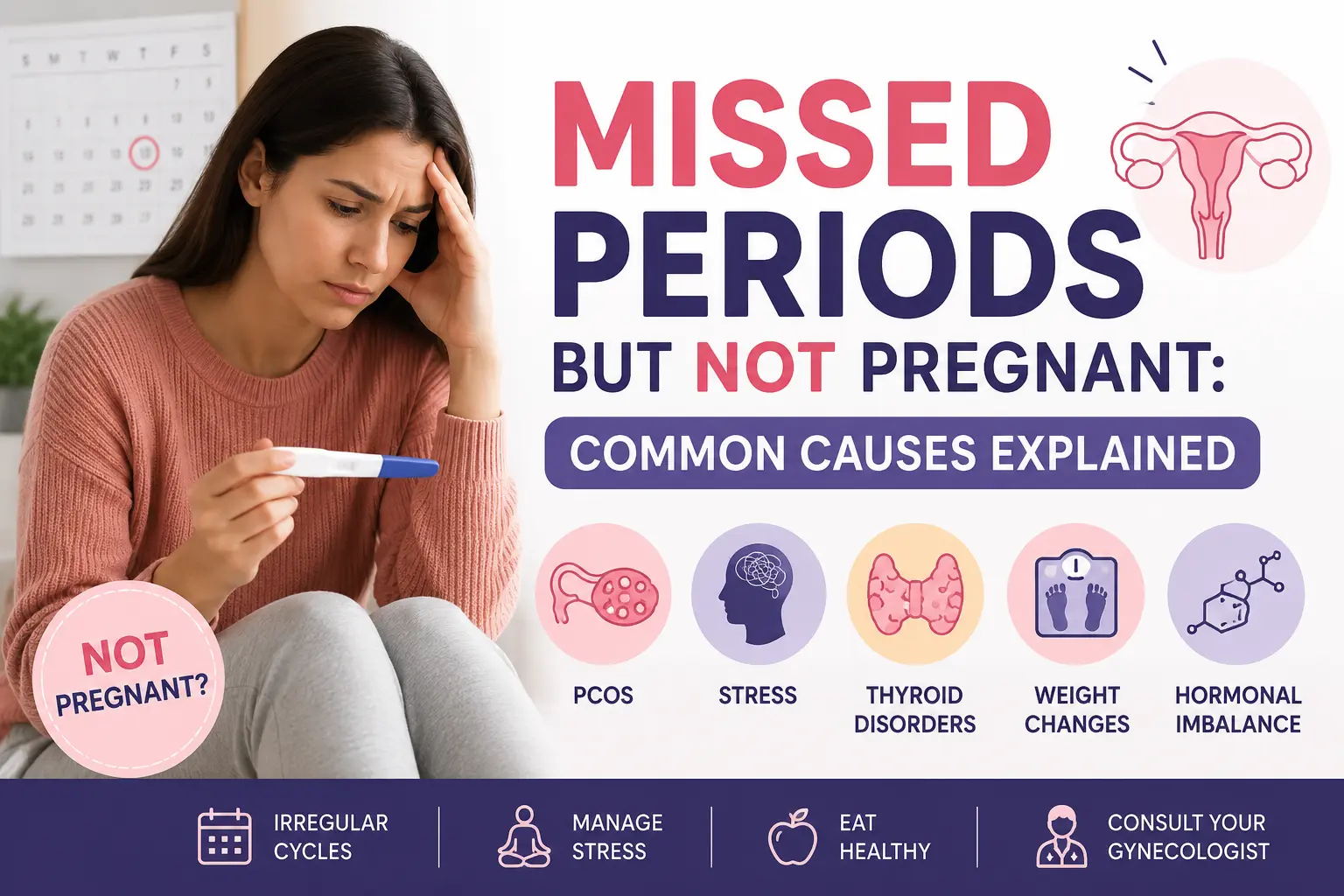
A missed period is often the first sign women associate with pregnancy. But what if your pregnancy test is negative and your periods still haven’t arrived? Irregular or delayed periods are actually very common and can happen due to several physical, hormonal, lifestyle, or medical reasons.
Many women experience stress and confusion when their menstrual cycle changes unexpectedly. While occasional cycle irregularities may not always indicate a serious problem, frequent missed periods should never be ignored. They can signal underlying hormonal imbalances, conditions like Polycystic Ovary Syndrome, thyroid disorders, nutritional deficiencies, or fertility-related concerns.
Understanding the causes of delayed periods can help women take timely action and protect their reproductive health.
What Is Considered a Missed or Delayed Period?
A normal menstrual cycle usually ranges between 21 to 35 days. If your period is late by more than a week or you frequently skip cycles, it is considered an irregular or missed period.
Common menstrual irregularities include:
- Periods arriving too early or too late
- Missing periods for months
- Very light or very heavy bleeding
- Unpredictable cycles
- Spotting between periods
Occasional irregularity can happen due to temporary lifestyle changes, but repeated delays need medical evaluation.
Common Reasons for Missed Periods Without Pregnancy
1. Polycystic Ovary Syndrome (PCOS)
One of the most common causes of irregular periods in women is Polycystic Ovary Syndrome. PCOS affects hormone balance and ovulation, leading to delayed or missed menstrual cycles.
Common Symptoms of PCOS
- Irregular or absent periods
- Weight gain
- Excess facial hair
- Acne
- Hair thinning
- Difficulty conceiving
PCOS can also affect fertility if not managed early. Proper diagnosis, lifestyle management, and hormonal treatment can help regulate periods.
2. Stress and Emotional Health
High stress levels can directly affect hormones responsible for ovulation and menstruation. Emotional stress, anxiety, poor sleep, or work pressure may delay periods temporarily.
When the body experiences stress, it produces cortisol, which interferes with reproductive hormones and menstrual regularity.
Stress-Related Hormonal Imbalance Symptoms
- Delayed periods
- Mood swings
- Fatigue
- Sleep disturbances
- Changes in appetite
Managing stress through exercise, proper sleep, meditation, and counseling can help restore menstrual balance.
3. Sudden Weight Changes
Both rapid weight gain and extreme weight loss can disrupt hormonal function.
Low Body Weight
Women with very low body fat may stop ovulating, causing missed periods.
Obesity
Excess weight can increase estrogen production, which interferes with normal ovulation.
Maintaining a healthy BMI plays an important role in regular menstrual cycles and fertility health.
4. Thyroid Disorders
The thyroid gland controls metabolism and influences menstrual hormones. Both hypothyroidism and hyperthyroidism can lead to irregular periods.
Signs of Thyroid-Related Menstrual Problems
- Delayed or absent periods
- Unexplained weight changes
- Fatigue
- Hair fall
- Mood changes
- Dry skin
A simple blood test can help diagnose thyroid-related hormonal imbalances.
5. Excessive Exercise
Intense workouts or overtraining can affect estrogen levels and disrupt ovulation. This is commonly seen in athletes or women doing excessive physical activity without adequate nutrition.
Balancing exercise with proper nutrition is important for reproductive health.
6. Poor Diet and Nutritional Deficiencies
Nutritional deficiencies, crash dieting, or inadequate calorie intake can affect hormone production and menstrual cycles.
Deficiencies in:
- Iron
- Vitamin D
- Vitamin B12
- Healthy fats
may contribute to hormonal imbalance symptoms and irregular periods.
7. Birth Control Changes
Starting, stopping, or changing hormonal contraceptives can temporarily affect menstrual cycles.
Some women may experience:
- Delayed periods
- Spotting
- Lighter periods
- Missed cycles
after discontinuing birth control pills or injections.
8. Perimenopause
Women in their late 30s or 40s may begin experiencing hormonal fluctuations before menopause.
Common Signs Include
- Irregular periods
- Hot flashes
- Mood changes
- Sleep disturbances
- Vaginal dryness
This transition phase can naturally cause missed or delayed cycles.
When Should You See a Gynecologist?
You should consult a gynecologist if:
- You miss periods frequently
- Your cycle suddenly becomes irregular
- Periods stop for more than 3 months
- You have severe pelvic pain
- You notice abnormal hair growth or acne
- You are trying to conceive without success
- Heavy bleeding or unusual spotting occurs
Early diagnosis can help identify hormonal or fertility-related conditions before complications develop.
How Doctors Diagnose the Cause of Missed Periods
A gynecologist may recommend:
- Hormonal blood tests
- Thyroid profile
- Ultrasound evaluation
- PCOS screening
- Pregnancy test
- Lifestyle and medical history assessment
These investigations help identify the exact cause of delayed periods and guide proper treatment.
Treatment for Irregular or Missed Periods
Treatment depends on the underlying reason.
Common Management Options Include
Lifestyle Modifications
- Weight management
- Healthy diet
- Stress reduction
- Regular exercise
Hormonal Treatment
Medications may be prescribed to regulate menstrual cycles and improve ovulation.
PCOS Management
Women with PCOS may need long-term hormonal and fertility management.
Fertility Consultation
If missed periods are linked to ovulation issues or infertility, fertility evaluation may be recommended.
Can Missed Periods Affect Fertility?
Yes, irregular periods often indicate irregular ovulation. Since ovulation is essential for pregnancy, untreated hormonal imbalance can affect fertility over time.
Conditions like:
- Polycystic Ovary Syndrome
- Thyroid disorders
- Obesity
- Hormonal dysfunction
can reduce the chances of natural conception if not managed properly.
Timely fertility consultation and hormonal evaluation can improve reproductive outcomes significantly.
Tips to Maintain Healthy Menstrual Cycles
Simple Lifestyle Habits That Help
- Maintain a balanced diet
- Exercise moderately
- Sleep 7–8 hours daily
- Manage stress effectively
- Avoid crash dieting
- Stay hydrated
- Schedule regular gynecological checkups
Healthy lifestyle habits support hormonal balance and menstrual regularity.
Final Thoughts
Missed periods do not always mean pregnancy. Hormonal imbalance, stress, PCOS, thyroid disorders, weight changes, and lifestyle factors are among the most common causes of delayed periods.
Ignoring persistent menstrual irregularities can delay diagnosis of important reproductive health conditions. Seeking timely medical advice can help restore hormonal balance, improve fertility, and prevent future complications.
If you are experiencing irregular or missed periods frequently, consulting a qualified gynecologist or fertility specialist can help identify the root cause and guide you toward the right treatment.
