
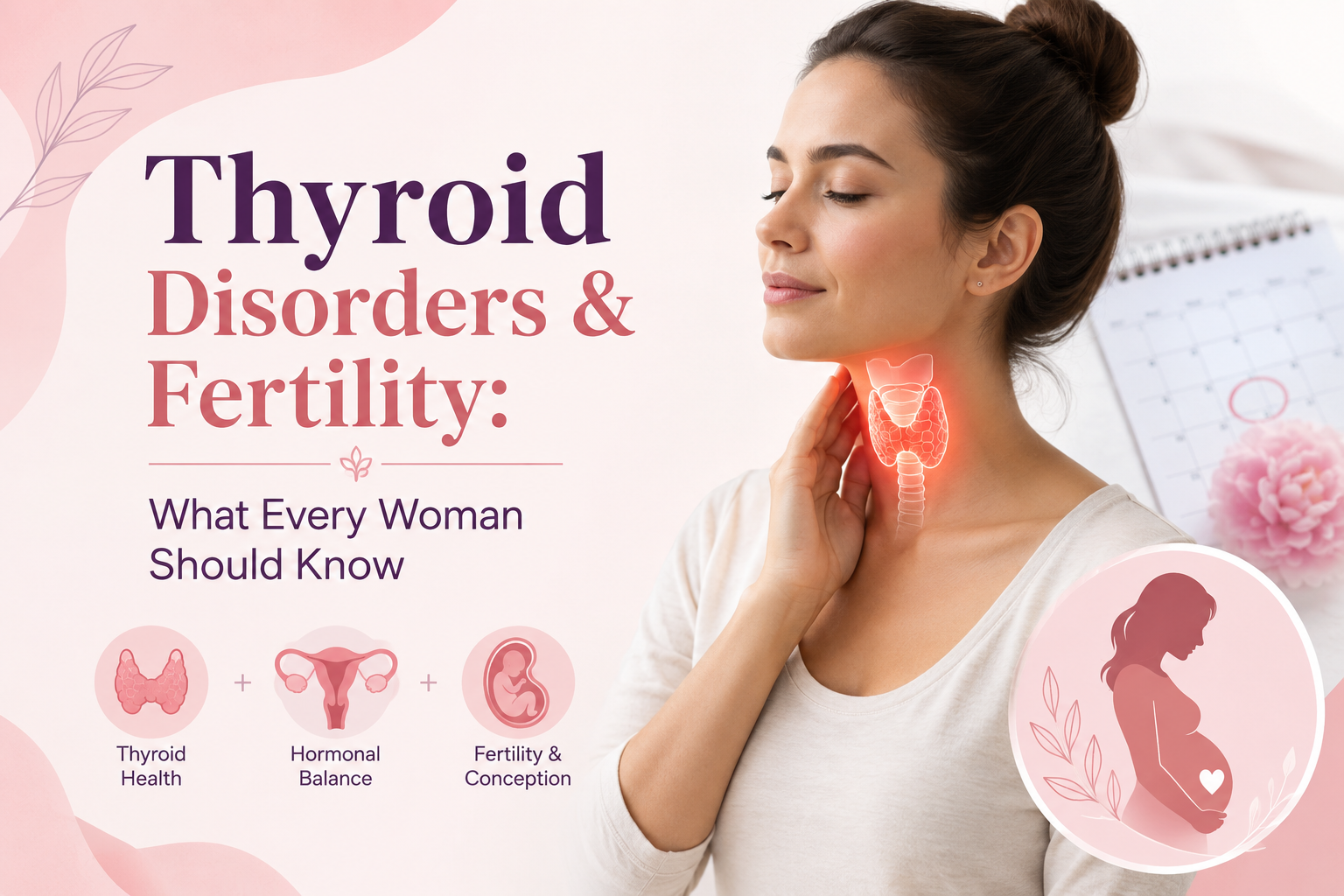
Thyroid disorders & fertility are closely connected, yet many women are unaware of how significantly the thyroid gland can impact their ability to conceive. The thyroid plays a crucial role in regulating hormones, metabolism, and menstrual cycles. Even a slight imbalance can disrupt ovulation, making it harder to get pregnant.
In this blog, we’ll explain how thyroid disorders affect fertility, common symptoms to watch for, and the best treatment options to improve your chances of conception.
What Is the Thyroid and Why Is It Important for Fertility?
The thyroid is a small butterfly-shaped gland located in the neck. It produces hormones—T3 (triiodothyronine) and T4 (thyroxine)—that regulate metabolism and influence reproductive hormones.
When thyroid hormone levels are too high or too low, it can interfere with:
- Ovulation (release of eggs)
- Menstrual cycle regularity
- Implantation of the embryo
- Overall pregnancy health
Types of Thyroid Disorders That Affect Fertility
1. Hypothyroidism (Underactive Thyroid)
This occurs when the thyroid does not produce enough hormones.
Impact on fertility:
- Irregular or absent periods
- Delayed ovulation
- Increased risk of miscarriage
Common symptoms:
- Weight gain
- Fatigue
- Hair thinning
- Depression
2. Hyperthyroidism (Overactive Thyroid)
In this condition, the thyroid produces excess hormones.
Impact on fertility:
- Light or infrequent periods
- Hormonal imbalance affecting ovulation
- Increased risk of pregnancy complications
Common symptoms:
- Weight loss
- Anxiety
- Rapid heartbeat
- Heat intolerance
3. Autoimmune Thyroid Disorders
Conditions like Hashimoto’s thyroiditis and Graves’ disease occur when the immune system attacks the thyroid.
Impact on fertility:
- Hormonal instability
- Increased chances of implantation failure
- Higher miscarriage risk
How Thyroid Disorders Affect Ovulation
Thyroid hormones interact with reproductive hormones like estrogen and progesterone. When the thyroid is imbalanced:
- Ovulation may not occur regularly (anovulation)
- Egg quality may be affected
- The uterine lining may not develop properly
This makes conception more difficult, even if other fertility factors are normal.
Thyroid Levels and Pregnancy Chances
For women trying to conceive, maintaining optimal thyroid levels is essential.
- Ideal TSH (Thyroid Stimulating Hormone) levels: 2.5 mIU/L or lower (for fertility planning)
- Even mild thyroid imbalance can reduce pregnancy chances
Doctors often recommend thyroid testing as part of routine fertility evaluation.
Signs You Should Get Your Thyroid Checked
If you’re planning pregnancy and experiencing any of the following, thyroid testing is important:
- Irregular periods
- Difficulty conceiving after 6–12 months
- Recurrent miscarriages
- Unexplained weight changes
- Chronic fatigue or mood changes
Early diagnosis can significantly improve fertility outcomes.
Diagnosis of Thyroid Disorders
Thyroid conditions are diagnosed through simple blood tests, including:
- TSH (Thyroid Stimulating Hormone)
- Free T3 and Free T4
- Thyroid antibodies (if autoimmune condition is suspected)
These tests help determine whether the thyroid is underactive, overactive, or functioning normally.
Treatment Options for Better Fertility
1. Medication
- Hypothyroidism is treated with thyroid hormone replacement
- Hyperthyroidism may require anti-thyroid medications
2. Lifestyle Modifications
- Balanced diet rich in iodine, selenium, and zinc
- Stress management
- Regular exercise
3. Fertility Support
If thyroid imbalance persists, assisted reproductive treatments like IUI or IVF may be recommended along with thyroid management.
Can You Get Pregnant with a Thyroid Disorder?
Yes, absolutely. With proper diagnosis and treatment, most women with thyroid disorders can conceive naturally or with medical support.
The key is:
- Early detection
- Proper hormone control
- Regular monitoring
Many women go on to have healthy pregnancies once their thyroid levels are stabilized.
When to See a Fertility Specialist
You should consult a fertility expert if:
- You’ve been trying to conceive for over a year (or 6 months if above 30)
- You have known thyroid issues
- You’ve experienced repeated pregnancy loss
A specialist can create a personalized plan to optimize both thyroid health and fertility.
Conclusion
Thyroid disorders & fertility are deeply connected, and even minor imbalances can impact your chances of conception. The good news is that with timely diagnosis and proper treatment, these challenges can be effectively managed.
If you’re planning pregnancy or facing fertility issues, don’t overlook your thyroid health. A simple test today can make a big difference in your journey to motherhood.
