
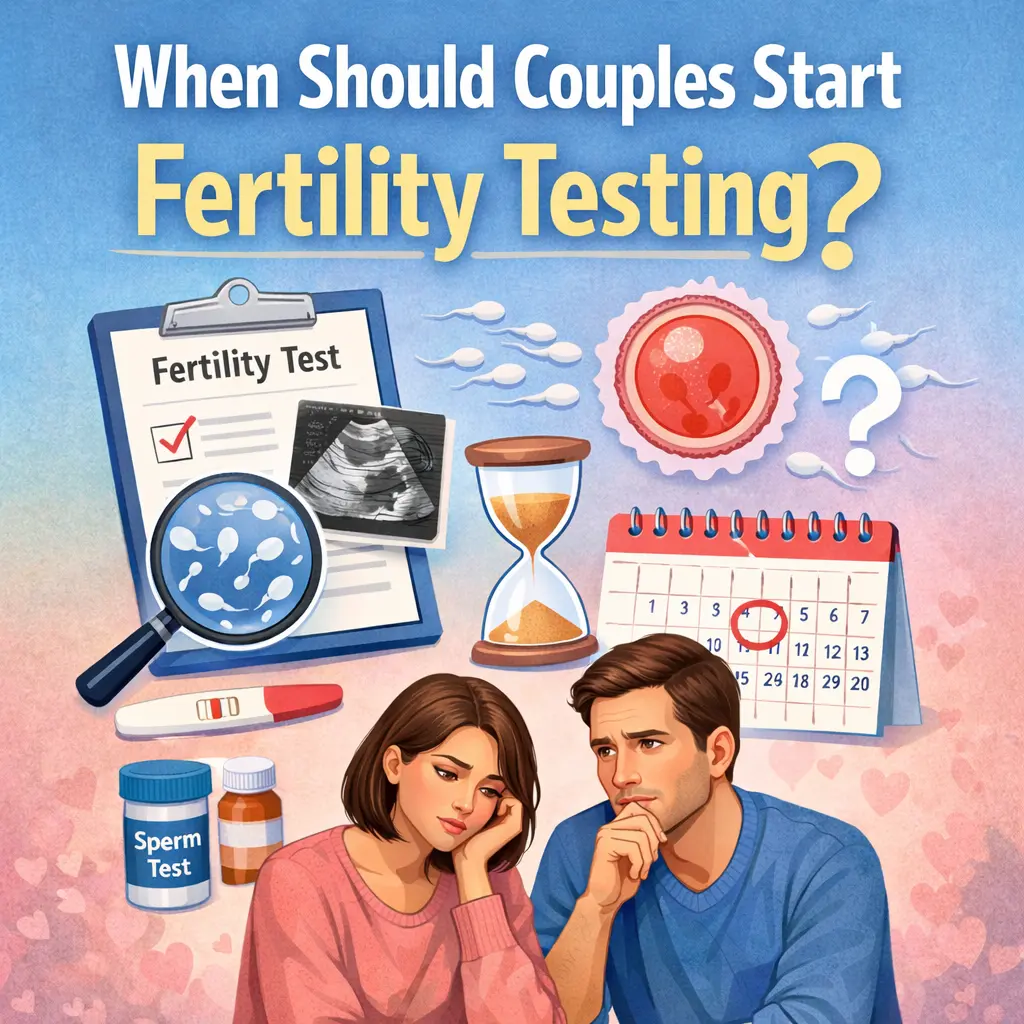
When should couples start fertility testing? This is one of the most common and important questions for couples trying to conceive. While many couples expect pregnancy to happen naturally within a few months, it’s important to understand that fertility can vary based on age, lifestyle, and underlying medical conditions.
Knowing the right time to seek fertility testing can help avoid unnecessary delays and increase your chances of successful conception. Early evaluation allows timely diagnosis and treatment, improving outcomes significantly.
What is Fertility Testing?
Fertility testing involves a series of medical evaluations to determine why a couple is having difficulty conceiving. It typically includes:
- Ovulation tracking
- Hormonal blood tests
- Ultrasound scans
- Semen analysis for male partners
These tests help identify issues such as irregular ovulation, low sperm count, hormonal imbalances, or structural problems.
General Timeline: When to Start Fertility Testing
1. After 12 Months of Trying (Age Below 35)
If you are under 35 and have been trying to conceive for one year without success, it is recommended to start fertility testing.
This timeframe is based on the fact that:
- Around 80–85% of couples conceive naturally within a year
- Delaying evaluation beyond this may reduce treatment success rates
2. After 6 Months of Trying (Age 35 or Above)
For women aged 35 and above, fertility declines more rapidly. You should consider testing after 6 months of trying.
This is important because:
- Egg quality and quantity decrease with age
- Early intervention can improve pregnancy chances
3. Immediate Testing (No Waiting Needed)
In some cases, couples should not wait and seek fertility testing immediately:
- Irregular or absent periods
- History of Polycystic Ovary Syndrome (PCOS)
- Known thyroid disorders
- Previous miscarriages
- History of pelvic infections or surgery
- Male partner with known sperm issues
- Painful periods suggesting Endometriosis
Early testing in these situations helps diagnose problems sooner and prevents unnecessary delays.
Signs You Should Not Ignore
Even if you haven’t reached the “6–12 month” mark, certain symptoms indicate the need for early evaluation:
- Irregular menstrual cycles
- Very painful periods
- Absence of periods
- Difficulty maintaining pregnancy
- Low libido or hormonal symptoms
These signs could indicate underlying fertility issues.
Why Early Fertility Testing Matters
Starting fertility testing at the right time can make a significant difference:
- Early diagnosis of treatable conditions
- Better success rates with treatments like IUI or IVF
- Reduced emotional stress
- Cost-effective treatment planning
Delaying evaluation can sometimes make treatment more complex.
What to Expect During Your First Visit
During your first fertility consultation, your doctor will:
- Take a detailed medical history
- Ask about menstrual cycles and lifestyle
- Recommend initial tests for both partners
- Create a personalized treatment plan
Remember, fertility is a couple’s issue, so both partners should be evaluated together.
Fertility Testing for Men vs Women
For Women:
- Hormonal tests (AMH, FSH, LH)
- Ovulation tracking
- Ultrasound scans
For Men:
- Semen analysis (count, motility, morphology)
Male factors contribute to nearly 40–50% of infertility cases, so testing both partners is essential.
Common Myths About Fertility Testing
- “We are young, so we don’t need testing.”
→ Age doesn’t guarantee fertility - “It’s always a woman’s issue.”
→ Male factors are equally common - “We should wait longer, it will happen naturally.”
→ Delaying can reduce chances over time
When to See a Fertility Specialist
If you’re unsure, it’s always better to consult early. A fertility expert can guide you based on your individual situation.
At Medfemme Women’s Clinic, Hauz Khas, we provide personalized fertility evaluation and treatment plans tailored to each couple’s needs, ensuring compassionate and evidence-based care.
Conclusion
When should couples start fertility testing? The answer depends on your age, medical history, and how long you’ve been trying.
- Under 35 → After 12 months
- 35 and above → After 6 months
- With symptoms or medical conditions → Immediately
Taking timely action can significantly improve your chances of conception and help you move forward with confidence.
Take the First Step
If you’ve been trying to conceive without success, don’t wait. Early fertility testing can provide clarity and the right direction for your journey to parenthood.
